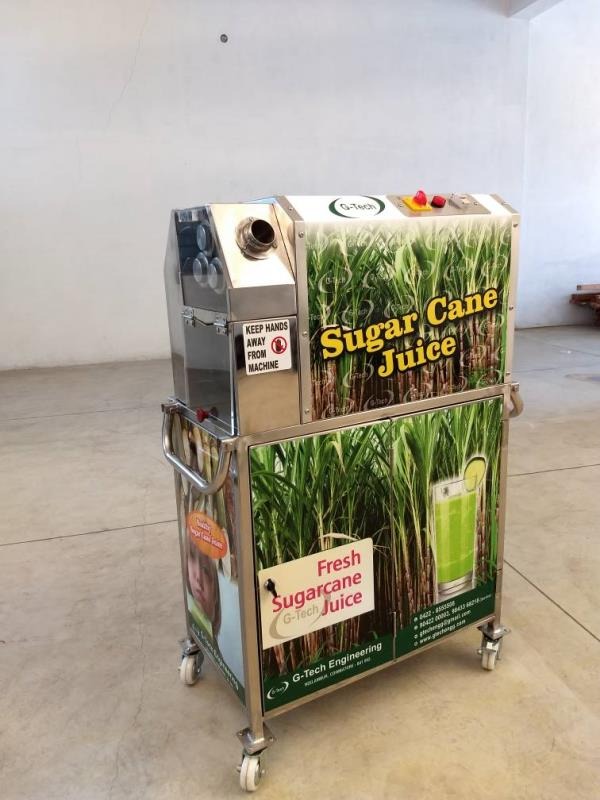
A bin-style juicer can lose output, overheat, leak, or become difficult to clean when cane preparation, feeding speed, waste handling, and electrical protection do not match the machine. You will be able to trace common faults safely, plan a workable stall layout, judge realistic capacity, and compare the bin design with alternatives before buying.
Key takeaways
- Isolate power and wait for rollers to stop before clearing bagasse.
- Keep cane lengths consistent and remove stones, wire, and hard knots.
- Provide drainage, dry electrical connections, and clearance around moving parts.
- Compare feed rate, roller layout, cleaning time, and service access before buying.
How to diagnose a stalled, noisy, or weakly crushing bin juicer
Switch off the motor, isolate the supply at the plug or breaker, and wait for every roller to stop before opening a guard. Never pull bagasse from moving rollers, even with a reverse switch.
These checks help separate sugarcane juice machine problems for street vendors using bin models without turning a small fault into an injury.
1. A sudden stop with cane wedged between rollers indicates a cane jam. Isolate power, remove the feed-bin contents with tongs, and check for bent, oversized, or cross-fed cane and bagasse wrapped around the scraper shaft.
2. If the motor slows while the rollers still turn, reduce the feed rate and remove short, hard, or very dry pieces. Persistent slowing, thermal trips, or a hot motor points to overloaded rollers, incorrect roller clearance, or a bearing problem.
3. A high-pitched squeal, rubber dust, or a burning-belt smell indicates belt slip. Do not tighten or realign it while connected; call a technician to inspect tension and pulley alignment.
4. If the motor runs but the rollers stop, or you hear a clunk at startup, suspect a loose coupling. Keep the machine isolated until the coupling and guards are inspected.
5. A hot casing, electrical smell, repeated thermal trips, or humming after heavy use indicates motor overheating. Stop service and let it cool; repeated overheating needs electrical and load testing.
6. A motor that hums, struggles to start, or only starts after a push may have a failed capacitor. Do not touch or bridge it; a qualified electrician must discharge, test, and replace it.
These commercial sugarcane juice machine issues require service when noise, vibration, leakage, or weak crushing continues after the bin is empty.
How cane preparation and shift cleaning prevent bin-model failures
Clean the feed path and empty every wet bin during the shift; those two habits prevent poor extraction, cloudy juice, odour, flies, and cross-contamination. Use fresh, firm cane with mud, leaves, damaged ends, and insects removed.
Trim long bends, split stalks, and excessively dry or hard pieces; they enter at an angle, overload rollers, or leave uncrushed fibre. Feed steadily instead of forcing handfuls into the rollers.
- Before service, wash the feed bin, roller ends, scraper, juice outlet, collection tray, and tray underside with potable water and food-contact detergent.
- Rinse until no detergent remains, apply the approved food-contact sanitiser at its label concentration, then let surfaces drain and air-dry.
- During service, remove trapped fibre from the scraper and outlet with the machine isolated. Do not push waste through with bare fingers or a dirty cloth.
- Empty juice and waste bins before they become full, and never leave extracted juice sitting in the machine between rushes.
- At closing, dismantle every tool-free part, clean hidden seams and drain points, inspect for retained pulp, and store the machine dry with the lid or splash guard clean.
This routine targets bin sugarcane juicer vendor problems at the surfaces that matter, not merely the smooth stainless-steel panels.
| Routine | Action | Failure prevented |
|---|---|---|
| Mid-shift emptying | Drain juice and waste; scrape retained pulp | Fermentation, odour, pests |
| After a spill | Stop, isolate, clean the tray underside and outlet | Cloudy juice and cross-contamination |
| Closing | Wash, rinse, sanitise, drain, and dry accessible parts | Overnight microbial growth |
How to make the stall safe for electricity, water, movement, and servicing
A bin machine belongs on a dedicated, earthed circuit matched to its nameplate voltage, frequency, and full-load current. Ask a licensed electrician to fit an MCB and a 30 mA RCCB or RCBO; an ordinary household plug, loose extension joint, or daisy-chained power strip is not wet-area protection.
Keep the motor, switch, plug, control box, and cable joints above splash level and under a canopy that sheds rain away from the machine. Do not cover ventilation slots.
Leave the manufacturer’s service clearance on every side; where no drawing exists, keep at least 600 mm clear on the service side and never block the feed, outlet, or emergency access.
Use this isolation procedure before washing, clearing, or servicing:
- Stop feeding cane and switch the machine off.
- Open the isolator or unplug it by the plug, not the cable.
- Prevent reconnection, then wait for rollers and belts to stop completely.
- Test that the machine will not start, and keep water away from live parts.
- Wash removable food-contact parts separately; never hose the motor, switch, bearings, or control box.
Lock castors before operation, or use adjustable levelling feet on uneven paving. Route the cable overhead or along the stall’s protected edge, with no loop across the customer path. Keep the waste bin outside the crushing guard and away from the cable.
These arrangements reduce commercial sugarcane juice machine issues for street vendors in Coimbatore, where dust and seasonal rain expose weak layouts quickly.
How to judge realistic output and choose the right machine layout
Usable peak-hour capacity is the demonstrated rate multiplied by 0.6 to 0.7—not the motor’s horsepower or a seller’s maximum claim. If you sell 250 ml glasses, divide available juice litres per hour by 0.25, then allow time for cane loading, payment, refilling, clearing jams and wiping contact surfaces.
Ask the seller to run cane matching your local diameter, hardness and length, using your stated voltage, fitted juice bin and waste bin. Record litres extracted in 15 minutes, repeat the test three times, and use the lowest result multiplied by four.
That figure exposes sugarcane juice machine problems for street vendors using bin models before you commit.
Choose the layout against your stall’s working space and service rhythm:
| Option | Best fit | Main trade-off |
|---|---|---|
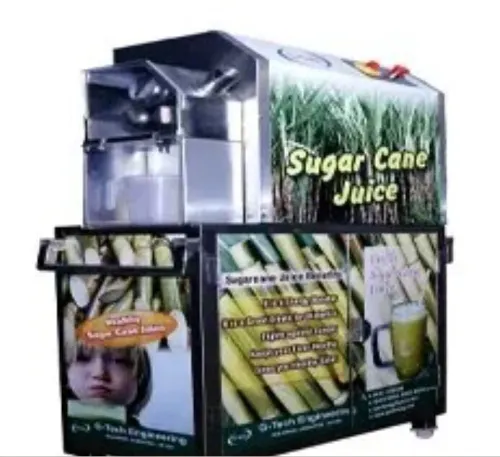
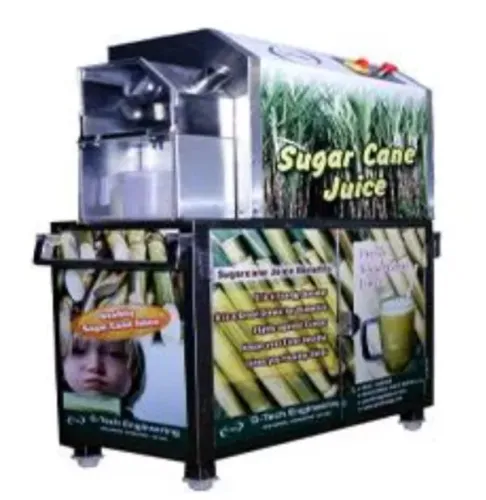
| Bin model | Low-volume stalls needing compact cane and waste collection | A full or inaccessible bin slows service and creates bin sugarcane juicer vendor problems |
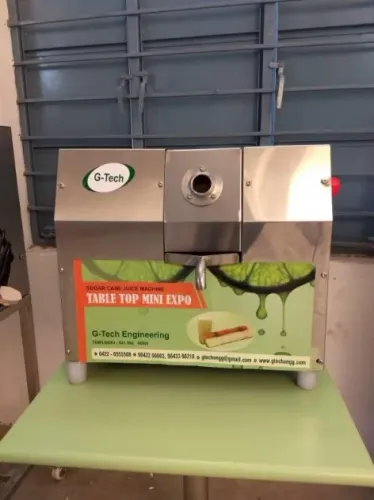
| Table-top machine | Counters with a separate, stable waste container | Saves floor space but requires deliberate cane handling and spill control |
| External-waste model | High-turnover stalls with room beside the machine | Faster emptying and less internal blockage, but the waste container and cable can become trip hazards |
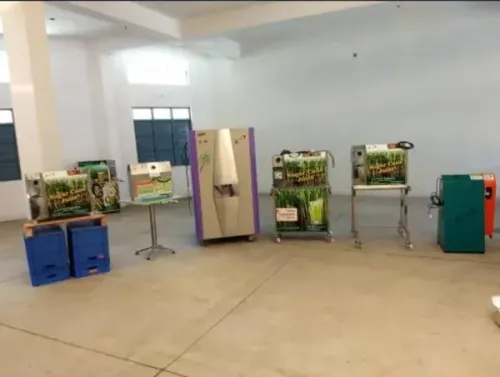
| Larger multi-roller machine | Queues requiring sustained output and multiple operators | Higher capacity needs more power, cleaning time, clearance and service access |
For mobile use, reject loose castors. Specify positive wheel brakes or leveling feet, and keep the waste container outside the operator’s path. Require a drawing that identifies each bin’s capacity, material, drain, removable parts and position relative to the guarded rollers. An open bin needs a splash guard that still permits inspection and cleaning.
What to inspect before purchase and what ownership will require
Run a 30-minute demonstration with your cane size, bend, feeding rate, and normal cleaning routine. Watch extraction, vibration, belt slip, juice spray, motor temperature, noise, and restart after a deliberate stop.
Ask the seller to show the machine empty and wet; commercial sugarcane juice machine issues often appear only when bagasse reaches the scraper or roller ends.
- Remove and refit every roller without dismantling the sealed drive or guarded frame. Check whether you need special tools, how long the job takes, and whether the scraper, seals, bearings, belt, coupling, capacitor, and switches have identifiable part numbers.
- Demand a drawing that labels whether “bin” means cane feed, juice collection, or waste; include capacity, material, drain, removable panels, and position relative to the crushing zone.
- Get a cleaning sheet naming the feed bin, roller ends, scraper, juice outlet, and tray underside. A stainless-steel exterior does not clean hidden wet surfaces.
- Obtain a written service schedule, spare-parts price list, technician response area, operator training session, and warranty exclusions. Confirm whether labour, transport, water damage, blocked rollers, belts, and consumables are covered.
- Ask G Tech Engineering to record these checks on the quotation, so street vendors in Coimbatore can compare ownership cost rather than motor power alone.
| Evidence | Favourable sign | Cost warning |
|---|---|---|
| Demonstration | Stable crushing and easy restart | Stalling, spray, overheating |
| Roller service | Tool-free removal with parts in stock | Sealed-frame dismantling |
| Warranty | Written duration and labour coverage | Verbal promises or broad exclusions |
| Training | Cleaning, isolation, and jam procedure | Delivery without operator instruction |
Related products
 | Juicer Machine Sugarcane Juicer Machine ( Bin Model -1000) Sugarcane Juicer Machine ( Model : Bin - 1000) It is Very Attractive, Compact and High Effective in Production.It has Inbuilt Dustbin Inside The... View product → |
 | G-Tech cane juicer Stand with bin model This machine is very attractive, compact and high effective in production. It has inbuilt dustbin inside the table of the machine. View product → |
Frequently asked questions
What should you do when a bin sugarcane juicer stalls or makes unusual noise?
Switch off and isolate the electrical supply, wait for every roller to stop, then inspect the guard, rollers, bearings, belt, and drive for trapped bagasse, loose parts, or overload. Never pull material from moving rollers.
How does cane preparation prevent street-vending machine problems?
Remove soil, stones, wire, and damaged sections, then cut cane into consistent pieces that suit the feed opening. Uneven or oversized pieces increase loading and can cause weak crushing, noise, or jams.
How can you make a bin-model juicer stall safer to operate and service?
Keep the machine level on a stable surface, route water away from plugs and switches, provide drainage, protect cables from foot traffic, and leave enough clearance to remove guards and service the drive.
How should you judge realistic output from a commercial sugarcane juicer?
Compare the stated feed rate with your cane size, operator pace, cleaning breaks, collection-container changes, and peak queue demand. Treat brochure capacity as a test condition, not guaranteed full-shift output.
What should you inspect before buying a bin sugarcane juicer?
Check the roller arrangement, guard and emergency isolation, motor and drive access, food-contact surfaces, drain and waste handling, cleaning procedure, spare-part availability, service response, and the electrical requirements for your stall.