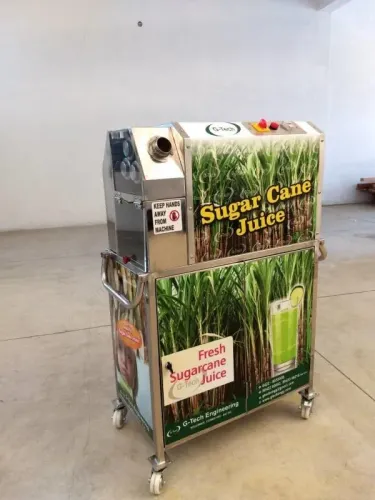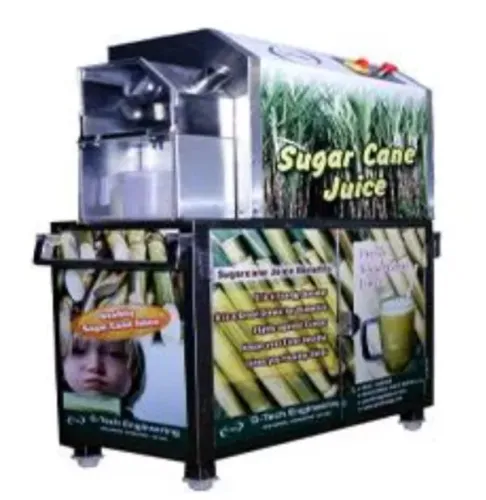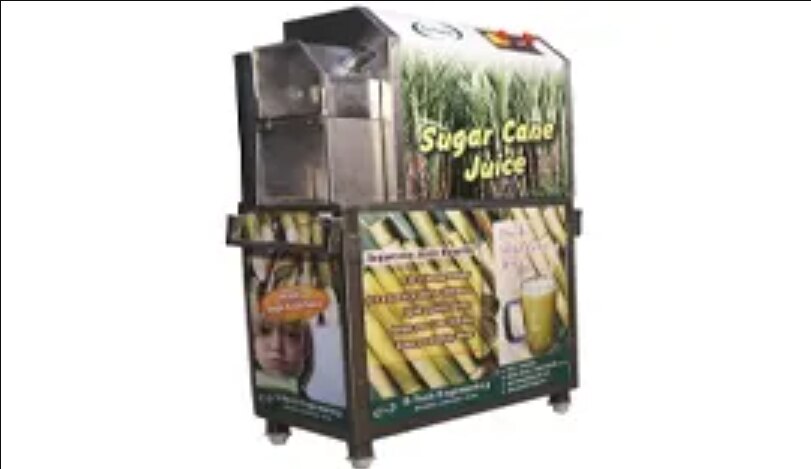
Dealers need to sell more than a motor rating or a maximum litres-per-hour figure: they must match the machine to the outlet, electrical supply, service routine and peak queue. By the end, you will be able to compare table-top, floor-standing and manual options, run a credible demonstration, and build a quotation that accounts for installation and after-sales work.
Key takeaways
- Target kiosks, cafés and canteens needing compact, steady juice service.
- Confirm single-phase power, counter clearance, drainage and operator access before quoting.
- Define output using hourly cane throughput, not the word automatic alone.
- Include cleaning instructions, spare parts, installation and response times in every deal.
Why table-top machines create a different dealer opportunity
A table-top machine wins when a juice outlet needs steady service from a compact counter and single-phase power, not maximum hourly volume. Juice kiosks, cafés, hotels, canteens and small food-service counters are easier prospects than buyers with space for a dedicated production line.
| Format | Best customer or situation | Dealer case |
|---|---|---|
| Manual juicer | Low-volume seller with ample staff and a tight budget | Lower purchase cost, but slower service and variable extraction |
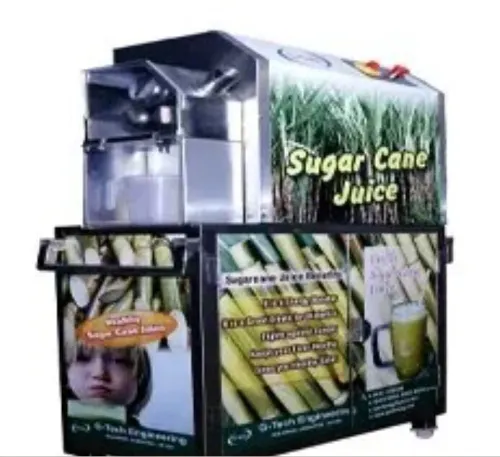
| Stand-with-bin model | Outlet needing floor-level collection and more working room | Suits regular volume, but demands more floor space and handling |
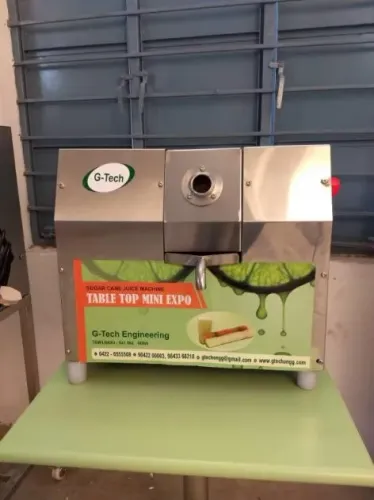
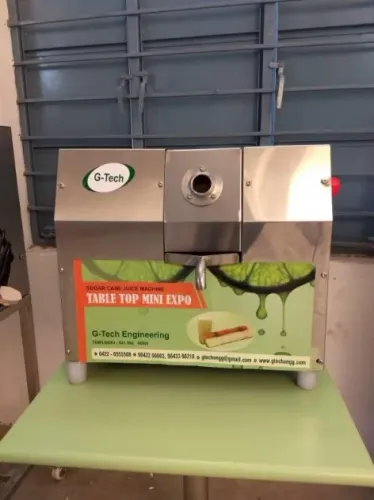
| Automatic table-top juicer | Counter service, limited footprint, repeatable daily orders | Easier placement, stronger presentation and less operator effort |
| Larger commercial machine | Busy outlet with queues, storage and adequate electrical capacity | Higher surge capacity, but greater installation, transport and service demands |
The automatic table top juicer advantages are easiest to demonstrate: consistent roller engagement, controlled juice discharge, reduced hand effort and a cleaner counter layout. It is not unattended; staff still trim and load cane, collect juice and bagasse, watch the feed and clean the extraction path.
Its smaller feed opening and lower surge capacity make it the wrong recommendation for a high-volume shop.
For dealers, the sugarcane juicer machine dealer benefits include simpler delivery, shorter commissioning and more outlets within a wider service area. Protect the machine in transit, verify the counter and power supply, and demonstrate it using the buyer’s cane.
Record feed effort, noise, vibration and cleaning time so the buyer sees a working advantage rather than an attractive catalogue claim.
What “automatic” handles—and what capacity really means
A stated 60 litres per hour is a ceiling, not a promise of 60 saleable litres. Automatic operation reduces repetitive control work, but it does not create an unattended counter.
The automatic table top sugarcane juicer machine benefits for dealers in Coimbatore are strongest when you sell labour savings, consistent extraction and simpler installation—not zero staffing.
The operator still has to:
- Select fresh cane and trim away damaged ends.
- Cut pieces to fit the feed opening and load them safely.
- Monitor feeding, remove bagasse and prevent pile-ups.
- Collect, strain or filter the juice and pack it for sale.
- Stop the machine and clean the extraction path during and after service.
Automation may control cane feeding, roller engagement, juice discharge and stopping, but confirm each function during the demonstration. Roller gap, surface condition, motor torque, cane diameter, freshness and loading rhythm affect output more than the motor’s nameplate rating.
Translate 60 litres per hour by testing the buyer’s usual cane with the actual operator. Include loading pauses, bagasse handling, juice collection, cleaning interruptions and spillage. For example, ten minutes lost to those tasks leaves 50 minutes of extraction time; even before unavoidable waste, the outlet cannot plan on 60 litres.
Record saleable litres in a timed trial, then match that figure to peak demand and queue length. A small counter may benefit from steady output, while a high-volume outlet needs surge capacity and more frequent loading.
Site, electrical and safety checks before recommending a model
Before dispatch, verify the customer’s supply, counter and service area against the model’s installation drawing. “Automatic” describes operation, not electrical compatibility or operator safety.
1. Record supply voltage, phase, frequency and available starting current. Confirm earthing, plug or isolator arrangement, cable rating and overload protection with a qualified electrician. Do not ship a single-phase model to a site with an unsuitable supply or assume a standard socket is adequate.
2. Measure the counter’s usable length, depth and load capacity, including space for the cane feed, juice container and bagasse bin. Allow the manufacturer’s required clearance around the motor, guards and removable parts; a tight fit blocks cleaning and alignment work.
3. Check ventilation around the motor and control panel. Do not place the machine inside a sealed cabinet or beside equipment that releases steam, grease or wash water.
4. Confirm drainage or a practical collection system for spills, rinse water, juice and bagasse. Keep electrical components away from splash zones and provide a washable, level surface.
5. Demonstrate the feed guard, roller enclosure, emergency stop, overload trip and restart behaviour after power failure. The operator must not reach moving rollers during loading or cleaning.
These checks protect the buyer from a failed installation and make the automatic table top juicer advantages—consistent feeding, easier operation and reduced setup—credible rather than merely promotional. Include a commissioning checklist, protected transport packaging and a procedure for electrical, alignment and installation faults.
Cleaning effort, food hygiene and the after-sales package
Cane fibre, not the motor, usually creates the first service complaint. It collects around strainers, juice channels, scraper areas and discharge openings, so the dealer must demonstrate power isolation, removal, washing, sanitation, drying and correct reassembly.
- Supply a cleaning tool and an illustrated daily-cleaning procedure covering every removable food-contact part.
- Identify screens, seals, scrapers and rollers as wear parts, with part numbers, replacement method and stock status.
- Provide a food-contact material declaration, operating manual, cleaning instructions, warranty terms and service record.
- Tell the buyer that FSSAI registration or licensing under Section 31 of the Food Safety and Standards Act belongs to the food business operator, not normally the machine dealer.
After-sales packages differ sharply in workload:
| Package | Dealer obligation | Likely service burden |
|---|---|---|
| Catalogue only | Deliver the machine and warranty paper | Repeated calls about fibre blockage, assembly and cleaning |
| Documented package | Add cleaning tools, parts list, illustrated SOP and hygiene documents | Fewer avoidable visits; planned wear-part sales |
| Commissioned package | Verify alignment, electrical operation, cleaning time and operator training on site | Higher installation time, but clearer fault diagnosis |
For Coimbatore distribution, G Tech Engineering gives a dealer a useful reference point: keep protected transport packaging, a commissioning checklist and replacement screens, seals and scrapers ready for the wider food-service catchment.
“Stainless steel body” proves little by itself. Check for dead pockets, tight crevices and juice-contact parts that cannot be removed without awkward disassembly; those features determine whether the buyer cleans the machine properly and whether your team inherits the problem.
Related products
 | G-Tech cane juicer Table Top Mini It is a table top economical model, compact to use. View product → |
 | G-Tech cane juicer Table Top ( Model : TT- 500 Mini ) Table Top 0.5 HP This Machine Is Design For Easy To Carry. In This Machine We Can Get Maximum 60 Litres of Juice/Hr. View product → |
How to demonstrate, quote and distribute the machine responsibly
Quote saleable litres per hour, not the brochure maximum. For commercial juicer distribution in Coimbatore, demonstrate each model with the buyer’s cane, the actual operator count, feed preparation, cleaning pauses and bagasse handling. Record noise, vibration, juice temperature and extraction results under identical conditions.
That is among the automatic table top sugarcane juicer machine benefits for dealers in Coimbatore: a buyer can judge the machine instead of trusting a headline figure.
| Model | Compare during demonstration | Risk to flag in quotation |
|---|---|---|
| Table-top automatic | Saleable juice per hour, counter footprint and cleaning time | Rated continuous duty may be lower than short-term peak output |
| Stand-with-bin | Feed effort, bin capacity and operator movement | Larger footprint and different drainage requirements |
| Manual juicer | Labour, consistency and queue handling | Lower purchase cost can conceal higher staffing cost |
Add these items to every quote:
- State whether capacity is continuous duty or a brief peak rate, and include cooling pauses, trimming, loading, collection and bagasse removal in the working figure.
- List protected transport packaging, delivery area, commissioning, alignment checks and the procedure for electrical or installation faults. Service inventory must cover expected wear parts.
- Give material, cleaning and operating documents. Tell the buyer that the food business operator remains responsible for FSSAI registration or licensing under Section 31 of the Food Safety and Standards Act; the dealer does not obtain it on the buyer’s behalf.
Frequently asked questions
Which businesses suit an automatic table-top sugarcane juicer?
Juice kiosks, cafés, hotels, canteens and small food-service counters suit table-top machines when they need steady service from limited counter space.
What does automatic mean on a sugarcane juicer?
Automatic functions can handle feeding, pressing or collection, but you still need to confirm the operator steps, cane preparation and actual hourly throughput.
What should dealers check before recommending a model?
Check counter dimensions, ventilation, drainage, operator clearance, single-phase supply, socket capacity, earthing and safe access for cleaning and maintenance.
What should a dealer include in the after-sales package?
Provide installation guidance, cleaning instructions, food-contact component details, spare-parts availability, warranty terms and a clear service response process.