Peeling changes the cane before it reaches the rollers: its diameter, surface grip, moisture, fibre content, and shape all affect extraction. By following the correct preparation sequence and testing each machine separately, you can identify whether low yield, slipping, overheating, blockages, or vibration starts in the peeler or the juicer.
Key takeaways
- Inspect cane diameter, bends and damaged ends before peeling or juicing.
- Keep peeled cane pieces within the juicer’s specified feed length and diameter.
- Check roller gap, feed alignment and drive load before changing settings.
- Test the peeler and juicer separately to locate the failing machine.
How peeling creates juicer problems
Most sugarcane juicer machine problems with sugarcane peeler machine equipment start with a mismatch between the cane shape and the roller gap. Commercial juicers are usually designed for washed cane with the rind still present.
Peeling reduces the diameter and can leave a tapered or flattened section, so the rollers apply less pressure at one point and excessive pressure at another.
The outer rind also provides a firm, continuous gripping surface. After peeling, the exposed cane can be wetter, smoother, or covered with loose fibre. That surface slips before the rollers bite, then catches suddenly.
A section with hard rind still attached creates a sudden resistance spike, while excessive removal of the edible flesh reduces the crushing load and juice volume. Short pieces, bent sections, and irregular feed sizes make the load change again at every entry.
These sugarcane peeler machine equipment problems often look like worn rollers or a weak juicer motor. The motor current rises and falls as the rollers alternate between gripping and slipping; cane can pause at the inlet, leave the discharge partly crushed, or make the frame vibrate.
Run a short test with clean, unpeeled cane or bypass the peeler. If grip, juice flow, and crushing return to normal, reset the feed rate and roller gap for the peeled diameter instead of replacing juicer parts.
The correct sequence from cane inspection to roller loading
Load peeled cane only after it passes a second inspection; peeling does not remove soil, lubricant, or microorganisms, and a damaged stalk can trigger commercial cane machine problems.
1. Inspect and wash whole cane at receiving. Remove soil, stones, metal, rotten sections, and heavily split stalks before the cane reaches the peeler.
2. Peel the cane, then examine every piece for remaining hard rind, excessive flesh removal, loose fibre, flattened areas, and tapered ends. Reject pieces that are too short, sharply bent, or too irregular for the roller opening.
3. Trim damaged ends and long fibre strands with the line stopped. Do not allow loose fibre to enter the juicer, where it can wrap around rollers or block the juice screen.
4. Wash the peeled and trimmed cane with clean potable water. This second wash removes peel fragments and exposed dirt; the peeler is not a washing or microbial-control step.
5. Drain the cane until it is wet but not carrying free water into the feed throat. Excess water dilutes juice and can worsen roller slip.
6. Orient each piece lengthwise with its straightest, widest face presented consistently to the rollers. Feed a uniform stream through the conveyor or guide; never hand-push cane into the roller nip.
Run a short test before production. If bypassing the peeler with clean cane restores steady pull-in, juice flow, motor sound, and bagasse dryness, correct the peeled-cane preparation instead of tightening rollers or replacing the juicer motor.
Fault-by-fault troubleshooting for the juicer line
Start with a short run using clean cane and the peeler bypassed. Record juice flow, bagasse dryness, motor current, roller speed, and screen loading; compare these readings with peeled-cane operation. This separates sugarcane juicer machine troubleshooting from upstream juice preparation equipment issues.
- Low yield: Check whether bagasse leaves wet and fibrous, then inspect the roller gap, pressure setting, cane moisture, and juice screen. A gap that is too wide leaves juice in the bagasse; excessive pressure overloads the drive without improving extraction.
- Slipping rollers: Look for tapered or flattened stalks, loose fibre, and a wet smooth surface. Reduce the feed rate and remove irregular pieces; do not increase pressure until the rollers are clean and aligned.
- Overheating: Stop the machine if motor current exceeds its normal operating reading. Check for an overloaded feed, tight bearings, blocked ventilation, low belt tension, or a roller that cannot turn freely.
- Abnormal noise: Isolate power and inspect bearings, scrapers, fasteners, and the feed path for metal fragments or trapped cane.
- Vibration: Check roller parallelism, shaft runout, mounting bolts, belt tracking, and uneven cane lengths. Intermittent pull-in points to unstable feeding.
- Juice leakage: Inspect seals, gaskets, drain trays, hose joints, and cracked welds. Standing juice in a drain or pump line also signals poor drainage.
- Blocked juice paths: Remove fibre from screens, channels, pump inlets, and dead legs before restarting.
- Belt or coupling failure: Check alignment, tension, cracking, slippage, and pulley wear; replace guards before testing.
- Inconsistent crushing: Compare roller gap across its width and feed orientation, then reject bent, short, or partly peeled stalks.
Clean trapped fibre after each stoppage; repeated failures indicate that feed preparation or line settings need correction, not simply a larger motor.
How to separate a peeler fault from a juicer fault
A bypass test separates sugarcane peeler machine equipment problems from juicer faults: feed clean, uniform cane directly into the juicer, then compare its performance with peeled cane.
1. Isolate both machines before inspection. Check each test piece for tapering, flattened sides, missing rind, exposed fibre, short cuts, and wet shavings. Irregular diameter points to the peeler, not roller alignment.
2. Run several consistent pieces and note whether the juicer pulls them in smoothly. Normal feeding during bypass but intermittent grip with peeled cane confirms an upstream preparation fault.
3. Listen to the motor. A steady hum during bypass followed by surging, growling, or repeated speed changes with peeled cane indicates fluctuating load from poor peeling or loose fibre at the nip.
4. Measure amperage against the juicer’s normal operating reading. Rapid swings suggest alternating grip and slip; a sustained high reading points to a blocked screen, overloaded rollers, or a mechanical fault inside the juicer.
5. Lock out power and inspect roller faces. Look for worn grooves, embedded fibre, syrup buildup, misalignment, or damaged bearings. Clean, unworn rollers that grip the bypass pieces shift suspicion back to the peeler.
6. Check belt tension and pulley alignment. A slack belt produces slip and weak juice flow even with correctly prepared cane; correct tension with normal amperage narrows the fault elsewhere.
7. Compare juice flow and bagasse. Reduced flow with fibre at the screen or pump inlet indicates debris from peeling; dry bagasse and normal flow during bypass support sugarcane juicer machine troubleshooting rather than replacing juicer parts blindly.
Sanitation, guarding, and choosing a workable combined line
Treat the peeler and juicer as one conveyorized hazard zone, not two independent machines. Sugarcane juicer machine problems with sugarcane peeler machine equipment become dangerous when an operator can reach knives, roller nips, or the transfer chute while either machine starts or coasts.
Complete this pre-start check:
- Wash, inspect, and trim cane before peeling; the peeler removes rind but does not control soil or microbes.
- Confirm smooth welds, cleanable screens, openable covers, and no dead legs where juice or fibre can collect.
- Fit guards over knives, rollers, belts, couplings, and the transfer point. Test interlocks, emergency stops, and restart prevention after power returns.
- Verify each motor’s starting current, overload setting, cable size, earthing, isolator, and the combined panel capacity. Check that one emergency stop removes motion from both machines.
- Test drainage with clean water. Drains must carry peak wash water and juice without pooling beneath the table or leaving liquid in a pump line.
- Confirm that a stopped peeler stops or safely starves the juicer, while a juicer trip prevents the peeler from packing the chute.
| Check | Acceptable result | Failure consequence |
|---|---|---|
| Guarding and interlocks | No access during run or coast; restart requires deliberate reset | Entanglement or unexpected motion |
| Electrical integration | Motors start without nuisance trips; overloads protect each motor | Overheating, belt damage, or fire |
| Drainage and cleanability | No trapped juice, fibre, or standing water after washdown | Spoilage and cross-contamination |
G Tech Engineering can help you verify whether a proposed juicer layout suits the peeler’s feed rate, motor load, drainage route, and stopping sequence before installation. That check prevents commercial cane machine problems and recurring juice preparation equipment issues.
Related products
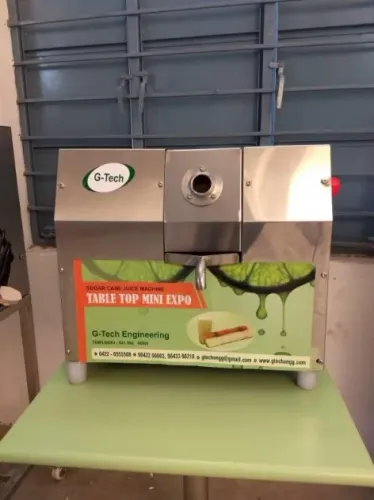
 | G-Tech cane juicer Table Top Mini It is a table top economical model, compact to use. View product → |
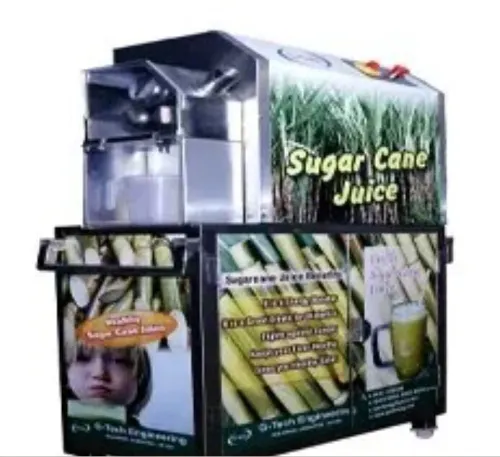
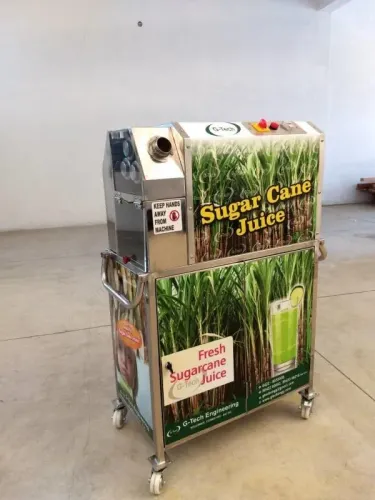
 | G-Tech cane juicer Stand with bin model This machine is very attractive, compact and high effective in production. It has inbuilt dustbin inside the table of the machine. View product → |
Frequently asked questions
How does peeling create sugarcane juicer problems?
Peeling changes the cane’s diameter, surface grip and shape. Short, tapered or uneven pieces can slip, bridge the feed opening or enter the rollers off-centre, causing poor extraction and overloads.
What is the correct sequence from cane inspection to roller loading?
Inspect the cane for diameter, bends, cracks and damaged ends; wash it; peel only when required; trim or reject unsuitable pieces; then feed pieces of consistent size into the rollers without forcing them.
How do you troubleshoot a sugarcane juicer line fault by fault?
Check the symptom first: slipping points to feed condition or roller contact, low juice yield points to roller setting or cane preparation, vibration points to alignment or an uneven load, and overload trips point to blockage, excessive feed or drive problems.
How can you separate a peeler fault from a juicer fault?
Run a controlled test with correctly sized unpeeled cane, then test peeled cane separately. If the juicer works with unpeeled cane but struggles after peeling, inspect peeled-cane dimensions, surface condition, trimming and feed consistency.
What sanitation and guarding checks matter in a combined line?
Clean juice-contact surfaces after production, remove trapped fibre before sanitising, keep guards fitted over rollers and drives, isolate power before clearing jams, and prevent peeled cane from contacting dirty surfaces.
Related product
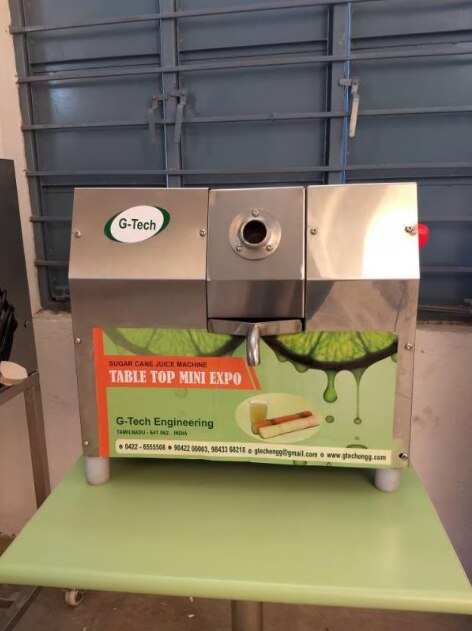
 | G-Tech cane juicer Table Top ( Model : TT- 500 Mini ) Table Top 0.5 HP This Machine Is Design For Easy To Carry. In This Machine We Can Get Maximum 60 Litres of Juice/Hr. View product → |