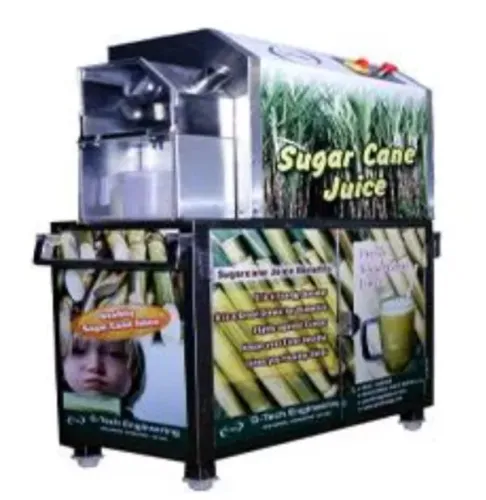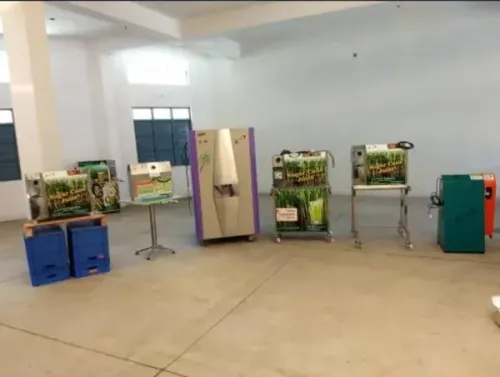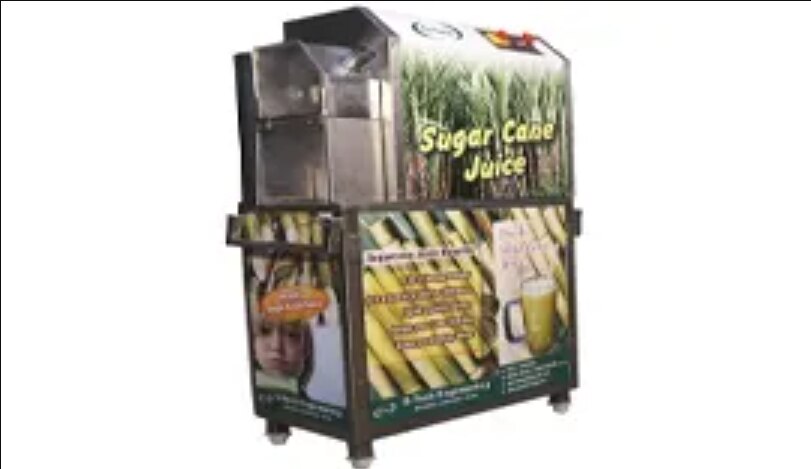
A sugarcane juicer extracts juice; a sugarcane peeler only removes the cane’s outer surface before another process. By comparing the workflow, labour, capacity, hygiene, maintenance and total cost per saleable glass, you can decide whether a peeler belongs in your shop or whether a commercial juicer is the better investment.
Key takeaways
- A peeler removes rind; a juicer extracts juice and cannot replace it.
- Choose roller capacity from peak hourly demand, not average daily sales.
- Peeling adds labour, cleaning and equipment costs without guaranteeing higher juice yield.
- Calculate added daily profit before buying a sugarcane peeler.
What each machine does in a Coimbatore juice shop
A sugarcane peeler cannot replace a juicer, and peeling is not a normal step for ordinary fresh-juice service. A juicer uses two or three rollers to crush trimmed cane, separating juice from bagasse; a peeler removes the outer rind without extracting either.
Use this workflow:
- Inspect the cane and wash it with potable water.
- Trim both ends with a clean tool.
- Peel it only when a recipe or cane condition requires peeled cane.
- Cut long lengths to suit the feed opening.
- Feed the cane into the juicer.
- Filter the juice and serve it promptly.
- Put bagasse into a covered waste container.
Most Coimbatore juice stalls feed whole, trimmed cane directly into the juicer. Peeling adds handling, exposed surfaces, cleaning and another maintenance point, but the cane still needs crushing afterward. A peeled cane also requires clean tools and protected contact surfaces; removing the rind does not make the juice hygienic.
In a sugarcane juicer machine versus sugarcane peeler machine in Coimbatore comparison, check what the quoted “peeler” actually is. Ask whether it is a true rind-removal machine, a scraper, a cutter or a trimming attachment.
Peeling can make sense in a preparation line that needs peeled cane for another product, such as cut cane or a separate processed-food recipe. For direct juice sales, it usually adds a step rather than replacing one.
Juicer versus peeler: capacity, labour, footprint and running cost
Judge the juicer by saleable filtered juice per hour, juice recovery, clean fibre discharge, blockage resistance and consistent feeding. Judge the peeler by rind-removal consistency, accepted cane diameter and length, surface loss and whether the peeled cane remains suitable for crushing.
| Option | Capacity and output | Labour, footprint and running cost |
|---|---|---|
| Juicer | Report input cane and finished filtered juice separately; excessive pressure can raise recovery but create fine bagasse and wear | Needs feeding, filtering and jam clearing; compare motor power, phase, rated current, starting load, cleaning time, roller and filter wear, and downtime |
| Peeler | Report rind removal, surface loss, accepted cane size and crush-ready output | Adds feeding and cleaning time, floor space and power; manual trimming can cost less at low daily volume |
A peeler does not replace a juicer, so its purchase cost sits on top of the crushing machine. That makes a sugarcane peeler machine comparison different from comparing two juicers. Roller count alone proves nothing: roller diameter, pressure, groove design, speed and cane condition determine recovery and filtration.
Ask the seller to state:
- Cane diameter, length and moisture condition
- Operator feed rate and whether capacity means input kilograms per hour or finished litres per hour
- Voltage, phase, rated current, starting load, overload protection and footprint
- Cleaning time, filter and roller replacement intervals, and expected jam-clear downtime
Do not compare kilograms per hour with litres per hour. Confirm the electrical supply before selecting juice shop equipment in Coimbatore.
Does peeling improve yield, taste, colour or hygiene?
Peeling does not guarantee sweeter juice, better colour, higher yield, longer shelf life or safer service. It removes some surface material, but it also exposes more cane to hands, tools, air and contact surfaces.
| Claim | What peeling actually changes | What can go wrong |
|---|---|---|
| Sweeter taste | Removes rind material, not a guaranteed source of sweetness | Cane variety and maturity matter more; blind tasting may show no difference |
| Higher yield | Removes material before crushing | Surface loss can offset any extraction gain |
| Better colour | May reduce some surface compounds | Colour still depends on cane, filtration and oxidation |
| Longer shelf life | Provides no preservation step | Low-acid juice remains vulnerable during warm holding |
| Safer service | Does not sterilise cane | Extra handling, water and tools create more contamination points |
Test both methods with the same cane lot, cane mass, trim length, roller setting, filter and ice practice. Run whole trimmed cane in one trial and peeled cane in the other.
- Record recovered juice mass or volume, saleable filtered juice, bagasse weight and filter blockage.
- Record cane-preparation time, cleaning-water use and staff minutes.
- Serve blind samples and compare taste and colour.
- Measure holding quality under the shop’s actual temperature, container and service conditions.
Use potable water, clean peeling and cutting tools, protected juice outlets and a written hold-time policy. Pressing or peeling does not make cane juice safe; contamination from water, ice, hands or equipment remains possible.
Specifications that matter for a commercial cane juicer in Coimbatore
Approve a commercial cane juicer in Coimbatore only after it passes a written supplier and site-acceptance checklist.
1. Request a parts list naming the material of rollers, juice channels, mesh screens, fasteners and welds. An outer stainless-steel body does not prove food-contact construction; verify 304 stainless steel for product-contact parts where offered.
2. Remove or inspect every juice-contact part. Rollers, trays, screens and chutes must be removable or reachable with ordinary tools, without pockets that trap sugary fibre overnight.
3. Run wet, fibrous cane, including long and uneven pieces. Watch for fibre bridges at the feed throat, shaft wrapping, screen clogging and drive overload. Reject a demonstration using only clean, uniform samples.
4. Get the jam procedure in writing: stop control, isolation method, safe reverse or clearing time, and prohibited hand access. Confirm replacement screens, bearings and seals are available.
5. Confirm continuous-duty or intermittent-duty classification, duty limits, thermal overload protection and maintenance intervals. A machine that overheats during the lunch rush is not commercial for your shop.
6. Match the nameplate voltage, phase and rated current to your wiring or generator. Check earthing, starter and overload protection, including motor starting current.
7. With G Tech Engineering or another local supplier, require commissioning, operator training, preventive-maintenance instructions, spare-part access and a written warranty response time. “Commercial” alone is not an acceptance specification.
Related products
 | Juicer Machine Sugarcane Juicer Machine ( Bin Model -1000) Sugarcane Juicer Machine ( Model : Bin - 1000) It is Very Attractive, Compact and High Effective in Production.It has Inbuilt Dustbin Inside The... View product → |
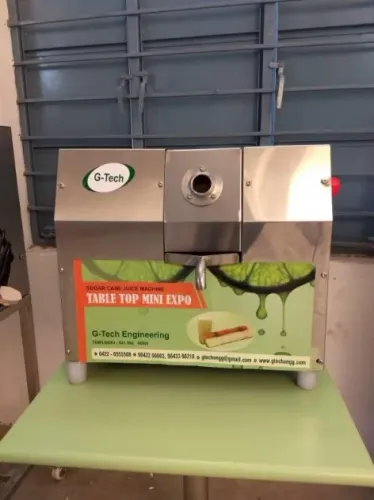
 | G-Tech cane juicer Table Top Mini It is a table top economical model, compact to use. View product → |
How to calculate the break-even point before buying a peeler
Break-even depends on cost per saleable glass, not the peeler’s purchase price. For a sugarcane juicer machine versus sugarcane peeler machine in Coimbatore, record one representative day for each demand level:
- Daily cane input, saleable glasses, selling price and juice recovery
- Preparation minutes, cleaning minutes, electricity units and water use
- Filter and roller replacement cost, average jam time and discarded juice
Current daily preparation cost equals manual labour hours multiplied by the loaded hourly wage, plus electricity, consumables, wastage and sales lost during downtime. Value lost during a jam equals unsold glasses multiplied by the selling price.
| Cost item | Manual preparation | Peeler option |
|---|---|---|
| Labour | Preparation time at loaded wage | Preparation and cleaning time at loaded wage |
| Machine cost | Existing juicer costs | Depreciation or monthly payment |
| Running cost | Electricity, filters, rollers and water | Peeler power, maintenance, sanitation and the juicer’s unchanged costs |
| Waste | Discarded juice and downtime | Surface-loss wastage, discarded juice and downtime |
Peeler daily cost is the total of its column. Divide the installed peeler cost by manual daily cost minus peeler daily cost to get break-even days. Run this calculation at low, normal and peak cane volumes; if it breaks even only during festivals, choose direct juicing.
For juice shop equipment in Coimbatore, buy a peeler only when extra saleable filtered juice repays its capital, labour and sanitation burden.
Frequently asked questions
Can a sugarcane peeler replace a juicer in a Coimbatore juice shop?
No. A juicer crushes cane between rollers and extracts juice, while a peeler removes the outer rind without extracting juice.
Does peeling sugarcane improve juice yield, taste, colour or hygiene?
Peeling can remove damaged or visibly dirty outer material, but it does not automatically improve yield, taste, colour or hygiene. Clean cane, trimming, washing and regular machine sanitation remain important.
What specifications matter when choosing a commercial cane juicer in Coimbatore?
Compare roller count and material, extraction capacity, motor power, electrical supply, feed opening, juice and bagasse separation, food-contact construction, guards, cleaning access and service support.
How do you calculate the break-even point for a sugarcane peeler?
Divide the peeler's total installed cost by its added daily contribution margin. Include labour, electricity, water, maintenance, downtime and the extra profit from any increase in saleable juice.
Related products
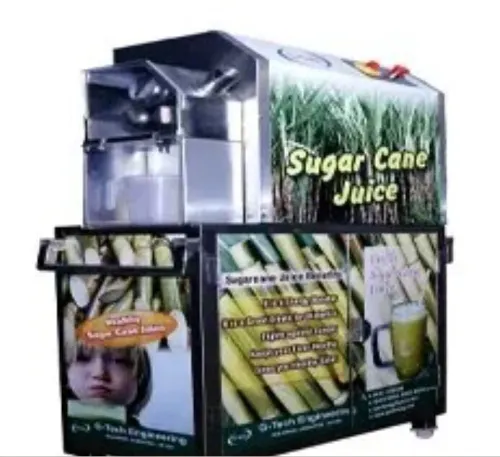
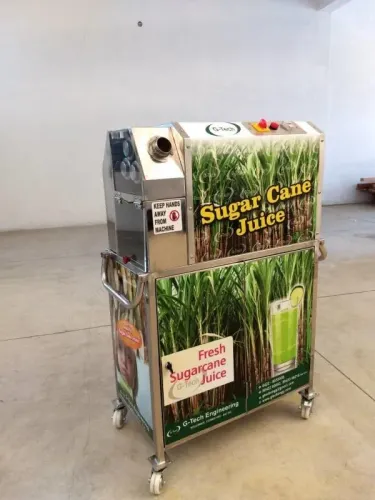
 | G-Tech cane juicer Stand with bin model This machine is very attractive, compact and high effective in production. It has inbuilt dustbin inside the table of the machine. View product → |
 | G-Tech cane juicer Table Top ( Model : TT- 500 Mini ) Table Top 0.5 HP This Machine Is Design For Easy To Carry. In This Machine We Can Get Maximum 60 Litres of Juice/Hr. View product → |