A catalogue capacity figure does not tell you whether a juicer will suit a roadside stall, café, kiosk or food court. By the end, you will be able to separate genuine automation from manual work, match machines to buyer workloads, calculate saleable output and assess the service obligations behind a profitable local sale.
Key takeaways
- Automation powers the rollers but still requires feeding, bagasse removal and cleaning.
- Match roller capacity and footprint to peak outlet demand, not catalogue figures alone.
- Compare juice output, stability, installation needs and service response before recommending a machine.
- Request a live test, safety details and a complete ownership-cost calculation.
What automation actually removes from daily juicing
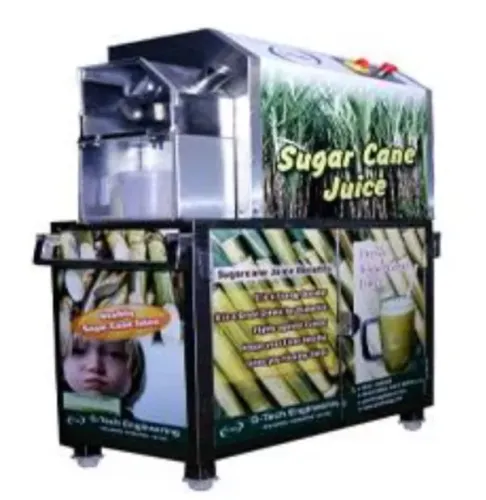
Automation removes hand-powered roller work and makes crushing more consistent; it does not remove the operator. Most automatic table-top machines power the rollers and crushing cycle, so a demonstration needs less physical effort and produces a repeatable result. The operator still prepares and feeds cane, removes bagasse, collects juice and cleans the food-contact path.
| Machine type | Automated operation | Operator’s remaining work | Demonstration and customer-use effect |
|---|---|---|---|
| Manual juicer | None; the operator turns or drives the rollers | Feed cane, maintain pressure, remove bagasse and clean | Slower demonstration with greater skill and effort |
| Semi-automatic juicer | Motor-driven rollers after manual feeding | Prepare cane, control feeding, clear bagasse and clean | Easier operation, but feeding remains the bottleneck |
| Automatic table-top juicer | Powered roller rotation and crushing cycle | Prepare cane, feed safely, monitor output, remove waste and clean | Quick showroom demonstration and simpler service at compact outlets |
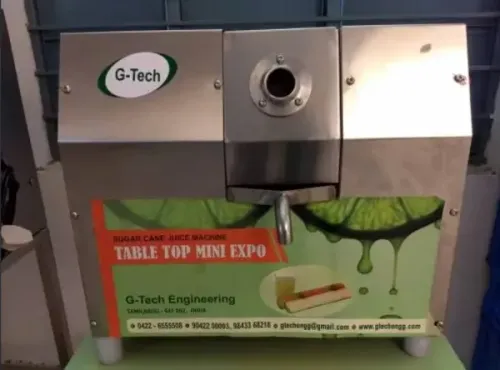
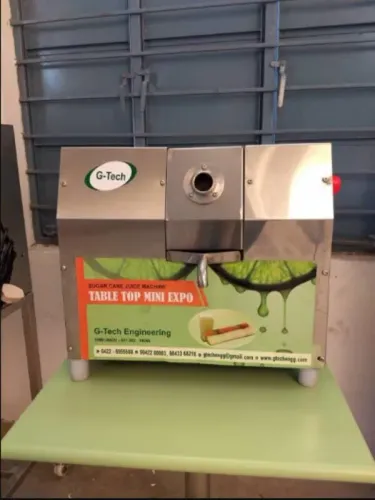
The main automatic table top juicer advantages appear during a live demonstration: you can show start-up, crushing and collection without explaining hand-crank technique. For the customer, that reduces repetitive effort at a juice stall, café, bakery, food court or seasonal kiosk, while a compact unit fits more counters than a large stand-mounted line.
Do not sell “automatic” as unattended operation. Verify reliable power, safe isolation or emergency stopping, and enough counter space for feeding, discharge, bagasse removal, cleaning and service access.
Match the machine to the outlet, not the catalogue capacity
A table-top unit suits outlets that need fresh sugarcane juice in regular small-to-medium batches, not continuous production through a long service queue. It works well where counter space, transport effort and installation time matter more than maximum hourly capacity.
| Outlet | Workload signal | Why it fits |
|---|---|---|
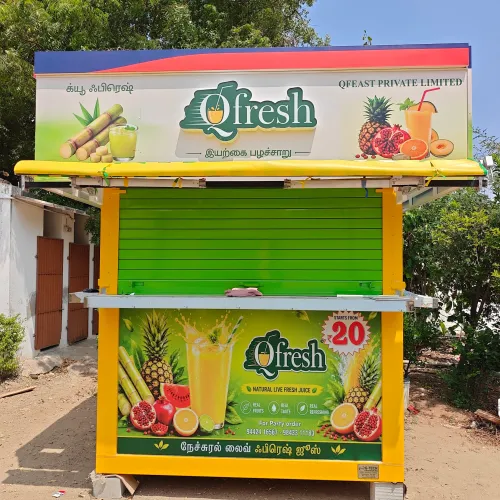
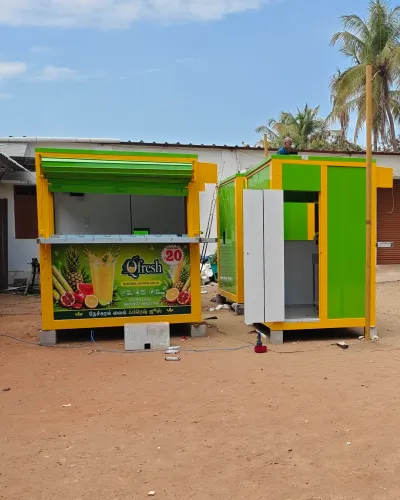
| Roadside juice stall | Short bursts during morning and evening peaks | Compact footprint supports a counter display and quick local delivery |
| Café or bakery | Steady orders alongside other drinks and snacks | Powered crushing reduces repetitive manual effort without demanding a full production line |
| Canteen or small hotel | Predictable service around meal periods | The operator can run batches when orders arrive and clean the machine between shifts |
| Seasonal kiosk or mobile vendor | Demand changes by location, weather and event | Lower installation effort makes relocation and seasonal stocking easier |
These are the sugarcane juicer machine dealer benefits: one demonstration can speak to several buyer types, from a small stall to a café, without showing a floor-standing system that exceeds their needs.
The buyer still cuts or prepares cane, feeds it safely, removes bagasse, collects juice and cleans the food-contact path; automation does not mean unattended operation.
Reject the table-top option when the outlet expects nonstop high-volume service, has unreliable power, or cannot keep wash water away from electrical controls. Check the nameplate voltage and frequency, earthing, overload or jam protection, emergency isolation and control-panel ingress protection before recommending it.
A larger stand-mounted or bin-model machine is the better fit when queue delays would cost more than the extra space and service effort.
Compare output, stability and installation before recommending it
A table-top unit earns its place only when the counter, power supply and service workflow support it. The automatic table top juicer advantages disappear if vibration shifts the machine, a low socket forces an extension lead, or staff cannot remove bagasse without blocking customer service.
| Option | Output and workflow | Site test | Choose it when |
|---|---|---|---|
| Table-top | Moderate, steady output; operator still prepares cane, feeds it, removes bagasse and cleans | Counter supports the machine’s weight; allow feed, discharge, drainage and service clearance | Café, bakery, small stall or kiosk has limited floor space |
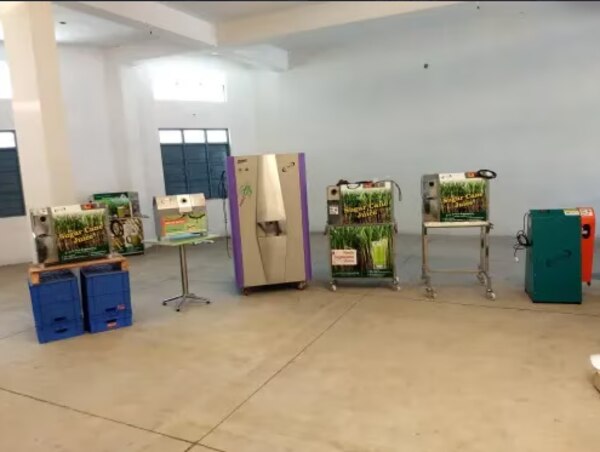
| Stand-mounted | More stable working height and easier access around the machine | Measure floor area, operator aisle, drain position and delivery route | Staff need longer shifts or frequent bagasse removal |
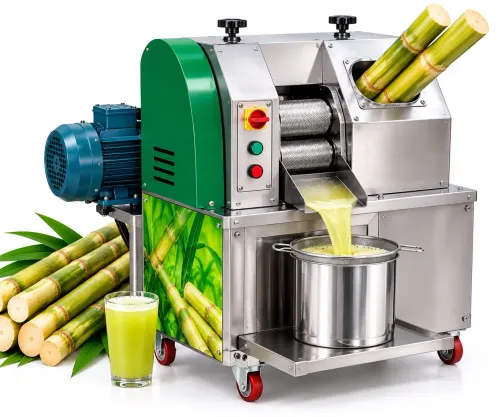
| Bin-model | Larger cane or bagasse holding capacity reduces interruptions | Check bin volume, loading height, cleaning access and waste removal path | Demand is uneven but refill interruptions are costly |
| Higher-capacity | Faster throughput can justify greater power and space | Verify nameplate voltage and frequency, earthing, cable rating, ventilation and isolator location | Peak demand exceeds table-top output and the outlet has adequate utilities |
Before recommending any model, test these points on site:
- Confirm the counter depth, level surface, overhead clearance and distance from water.
- Check overload or jam protection, emergency isolation, and control-panel ingress protection.
- Run the machine with representative cane; record usable output, noise, vibration and juice discharge speed.
A table-top choice is wrong when the customer needs unattended operation, continuous bulk production or floor-level waste handling. The operator remains responsible for safe feeding and cleaning, regardless of the automation.
Build the Coimbatore dealer case around delivery and service
After the sale, profitability depends on a delivered-and-supported machine, not the showroom margin. For commercial juicer distribution in Coimbatore, quote unloading, placement, commissioning, operator instruction and a defined service response separately. A buyer who receives working equipment quickly is less likely to treat your price as an avoidable premium.
Build every quote around the costs that follow the invoice:
- Delivery labour and transit protection
- Demonstration cane, installation time and training
- Warranty visits, travel and downtime
- Stocked rollers, bearings, seals, couplings, belts, switches and wiring
- Seasonal inventory, taxes and delayed customer payments
Keep a simple service record for each unit: serial number, installation date, motor details, cleaning instructions, replaced parts and the next inspection date. Ask G Tech Engineering which wear parts and crushing-gap components are available locally, then set a replenishment level before the first unit is sold.
The automatic table top sugarcane juicer machine benefits for dealers in Coimbatore become clearer when you sell a service route rather than a box. Group nearby outlets—juice stalls, cafés, bakeries, canteens and kiosks—into scheduled delivery and maintenance rounds. Offer a paid cleaning and inspection visit, while keeping emergency repairs separate.
Train the operator to isolate power, clear jams safely, remove bagasse and keep water away from controls; fewer avoidable failures protect both your margin and your reputation.
Related products
 | G-Tech cane juicer Table Top Mini It is a table top economical model, compact to use. View product → |
 | G-Tech cane juicer Table Top ( Model : TT- 500 Mini ) Table Top 0.5 HP This Machine Is Design For Easy To Carry. In This Machine We Can Get Maximum 60 Litres of Juice/Hr. View product → |
Demand test evidence, safety details and a complete cost calculation
Do not stock on catalogue capacity alone: obtain a live demonstration, written specifications, safety evidence and a buyer-backed demand signal before committing cash.
1. Run a timed trial with the cane your local buyers use. Record preparation time, juice output, bagasse handling, noise, cleaning time and recovery after a jam. Ask for the rated voltage, frequency, motor rating, roller material, crushing-gap range and duty cycle in writing.
2. Inspect protection before demonstrating it. Verify earthing, overload or jam protection, emergency-stop or isolation method, control-panel ingress protection, guarded rollers and safe access for cleaning. Confirm the outlet can keep water away from switches, wiring and the motor; automation does not permit unattended feeding or cleaning.
3. Obtain evidence of demand: signed trial orders, deposits, written enquiries or a list of named outlets with expected daily usage. Demonstrate to cafés, stalls, canteens and kiosks, then record objections about footprint, power, price and service response.
4. Calculate contribution per unit as selling price minus purchase price, freight, insurance, unloading, installation labour, demonstration cane and cups, transit damage allowance, warranty visits, spare-parts carrying cost, finance or payment-term cost, taxes not recoverable, and expected seasonal inventory loss. Add commissioning and operator training.
5. Check sugarcane juicer machine dealer benefits against service costs: price rollers, bearings, seals, couplings, belts or chains, switches and wiring, define replacement intervals, and confirm local stock. Recommend the machine only when contribution covers those costs plus your required margin and a downtime reserve.
Frequently asked questions
What work does an automatic table-top sugarcane juicer remove?
It removes hand-powered roller work and makes the crushing cycle more consistent. The operator still prepares and feeds cane, removes bagasse, collects juice and cleans the food-contact path.
How should dealers match a table-top juicer to an outlet?
Assess the outlet’s peak demand, counter space, electrical supply, workflow and cleaning routine instead of relying only on catalogue capacity.
What should dealers compare before recommending a sugarcane juicer?
Compare demonstrated juice output, performance stability, installation requirements, safety details, service coverage and the machine’s complete ownership cost.
What evidence should a dealer request during a machine demonstration?
Request a live cane-crushing test, output evidence, safety information, installation requirements, warranty terms, spare-parts details and a clear service process.
Keywords