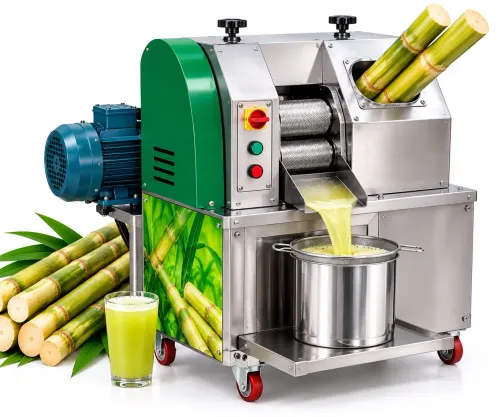
Peeling changes the cane’s diameter, surface grip, length and moisture exposure before it reaches the crushing rollers. By checking preparation, transfer, machine settings and failure symptoms in the right order, you can separate a peeler fault from a juicer fault and decide whether the extra equipment improves your operation.
Key takeaways
- Cut peeled cane to fit the juicer feed throat before loading.
- Reject cane with surface moisture, rot, grit, or excessive diameter variation.
- Check feed alignment, roller clearance, guards, and motor load after an overload.
- Clean from peeler to juicer, then verify dry bearings and electrical parts.
How should peeled sugarcane be prepared before it reaches the juicer?
Peeled cane should reach the juicer clean, dry on the surface, sound, and cut to a length and diameter that fit the feed throat. This handoff prevents sugarcane juicer machine problems with sugarcane peeler machine equipment from becoming roller, bearing or scraper faults.
1. Inspect every stalk for dirt, stones, damaged ends, loose rind and excess moisture. Reject oversized, partially peeled or heavily damaged pieces. Set aside tapered, flattened, split, irregular and overly short cane instead of forcing it into the rollers.
2. Trim acceptable stalks to a consistent length and diameter within the juicer manufacturer’s feed specification. Keep the cut square; a sloping or broken end presents an uneven bite to the first roller.
3. Check the peeling result before blaming the juicer. Excessive peeling depth, a dull or badly positioned blade, high feed speed and inconsistent clamping reduce or distort the cane.
Peeling compression, roller gap and cane diameter then change the bite again; these sugarcane peeler machine equipment problems can cause rollback, intermittent feeding and changing motor load.
4. Stage only a small batch beside the feed throat and remove peel fragments. Keep the cane moving quickly so exposed tissue does not leak juice or sit in contaminated water.
5. Align the discharge conveyor directly with the throat. Feed the stalk in its lengthwise direction, straight into the first roller; never drop it diagonally, because side impact and angled entry create uneven loading.
Do not mix tapered or short pieces with regular cane, and stop rather than force a stalk that does not enter freely.
Which symptoms show that peeling is causing poor juicer performance?
A peeling-related fault changes how cane enters, grips and breaks down inside the juicer. Use the symptom, not the motor sound alone, to identify the likely source.
| Symptom | Likely cause | Check |
|---|---|---|
| Crushed or split cane | Excessive peeling pressure, dull tool or poor clamping | Inspect peeler settings and cane ends |
| Uneven peeling or excess rind | Misaligned blade, variable diameter or inconsistent feed | Compare peeled pieces across the batch |
| Fibrous waste | Deep peeling, damaged cane or loose rind entering the rollers | Inspect scrapers, screens and waste discharge |
| Roller jam or stalk rollback | Tapered, flattened, short or diagonally delivered cane | Check the transfer drop and feed alignment |
| Slipping | Rollers rotate without a reliable bite; throughput falls | Check roller gap, surface condition and feed pressure |
| Overload | Current rises, speed drops, belts slip or thermal protection trips | Check for multiple stalks, blockages and excessive pressure |
| Abnormal noise or vibration | Uneven loading, loose parts, bearing wear or gearbox strain | Stop and inspect before continuing |
| Overheating | Restricted flow, overload or repeated slipping | Check motor load, ventilation and thermal trips |
| Low juice yield | Poor roller grip, damaged cane or blocked screen | Compare extraction and screen condition |
| Cloudy juice | Excess fibre, damaged cane or a blinded screen | Clean the screen; finer mesh improves clarity but reduces flow and needs more cleaning |
| Leaks | Blocked drain channel, displaced seal or juice bypassing a screen | Inspect drains, seals and screen seating |
Peel fragments and loosened rind can restrict the feed throat, roller scrapers, juice screens and drain channels. For sugarcane juicer machine troubleshooting, run correctly prepared unpeeled cane and peeled cane at the same cut length and feed rate.
If only peeled cane causes rollback, uneven extraction or changing motor load, investigate the peeler, transfer point and preparation standard first. These are common juice preparation equipment issues.
What should you check first when the commercial cane machine stops or overloads?
Stop feeding immediately, isolate electrical power, and wait until every roller and belt has stopped. Never pull blocked cane from moving rollers by hand; this is the first rule for commercial cane machine problems and sugarcane juicer machine troubleshooting.
1. Remove the blockage only after isolation. Look for stones, foreign material, multiple stalks, excessive cane length, peel buildup, and a narrowed roller gap. Each can raise motor load or prevent a clean bite.
2. Inspect the transfer conveyor. A side impact, sudden drop, or accumulation point can force cane into the throat at an angle, causing uneven roller loading, scraper damage, and bearing wear.
3. Check the mechanical drive before resetting anything. Look for belt or chain slip, loose fasteners, roller misalignment, scraper contact, worn bearings, damaged shaft seals, and unusual gearbox noise.
4. Check the electrical system with a qualified person: supply voltage, phase loss, loose terminals, overload settings, and thermal trips. Repeated trips are not fixed by fitting a larger fuse; a jam, failed bearing, misalignment, or over-tightened roller gap may be the cause.
5. Shut down and arrange qualified repair for abnormal noise, rapid vibration, smoke, a burning smell, exposed wiring, a seized bearing, or any repeated overload. Do not restart to “test” a machine showing these signs.
6. Separate a peeler fault from a juicer fault by running correctly prepared unpeeled cane and peeled cane at the same cut length and feed rate. If the defect begins before transfer, inspect peeling depth, tool sharpness, clamping, and conveyor handoff first.
How do you clean and sanitize a peeler-to-juicer line without creating new faults?
Peeling creates a wet waste stream, so remove peel fibres before they harden, ferment or enter the juice compartment. Peeling does not replace washing and sanitation: exposed cane tissue meets operators, dirty conveyors, peel fragments and contaminated water.
1. Stop the line, isolate power and wait for every roller and conveyor to stop. Remove peel from the feed throat, conveyor transfer, roller scrapers, juice screen, drain channel and waste area.
2. Remove rollers, screens and other accessible food-contact parts according to the equipment instructions. Brush crevices around shaft seals, scraper mounts, screen frames and dead-ended pipes; trapped fibre can cause juice preparation equipment issues after reassembly.
3. Rinse with controlled water that reaches each food-contact surface without flooding the machine. Keep motors, switches, control panels, bearings and electrical connectors dry; never direct a hose at them.
4. Apply the site’s approved detergent at its labelled concentration. Scrub until sugar film, juice and peel residue are gone, then rinse as the detergent label requires.
5. Apply the approved sanitizer at its labelled concentration and contact time. Do not shorten contact time, and do not leave sanitizer pooled in dead-ended pipes.
6. Clear standing juice and wet peel promptly to limit sugar loss, odour and microbial risk. Check that every drain channel flows freely before reassembly.
7. Inspect the line: parts must be clean, dry and correctly fitted, with screens, scrapers and seals seated properly. Run a brief test cycle before production and stop if leakage, rubbing or restricted drainage appears.
Ignoring these controls can turn sugarcane peeler machine equipment problems into blocked screens, contaminated juice and repeat faults.
Is a separate sugarcane peeler worthwhile for your operation?
A separate peeler is worthwhile when consistent labour, presentation and tested throughput save more than the machine adds in space, power, handling and sanitation. For a small outlet, manual preparation or direct feeding of washed, trimmed cane is usually better if setup and cleaning take longer than peeling.
| Option | Labour and throughput | Waste, consistency and yield | Space, power and upkeep |
|---|---|---|---|
| Manual peeling | More labour; output follows operator speed | Flexible results; low peel waste when careful | Little space and power; simple cleaning |
| Separate peeler | More uniform labour; throughput depends on the slowest stage | Consistent appearance, but excess peeling can reduce yield and create juice leakage | Adds floor space, power, bearings, belts, waste handling and sanitation points |
| Direct feeding | Lowest handling; often fastest for low-volume work | Retains more cane; requires consistent washing, trimming and sizing | Least equipment; clean one feed path and juicer |
Do not use a catalogue rating as your line capacity. Test the actual cane variety, diameter range, moisture condition and cut length through the peeler, transfer point and juicer; short, tapered, flattened or irregular pieces can cause rollback, slipping or poor extraction. Reject the peeler if the juicer cannot accept its resulting dimensions.
For sugarcane peeler machine equipment problems and commercial cane machine problems, compare equal batches of correctly prepared unpeeled and peeled cane at the same feed rate. Ask G Tech Engineering to confirm feed dimensions, adjustment range, power supply, cleaning access, replacement parts and a demonstration with your cane.
Related products
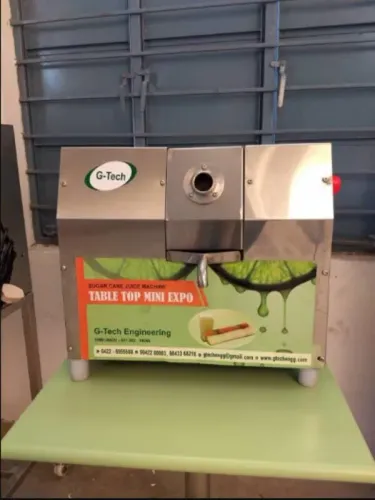
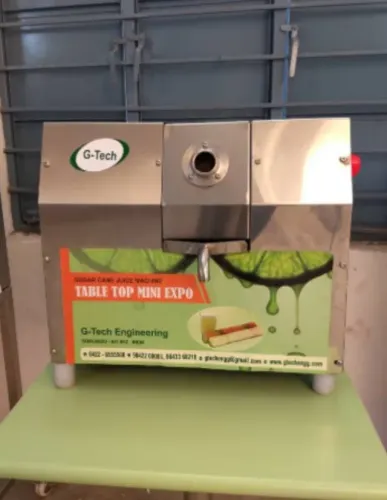
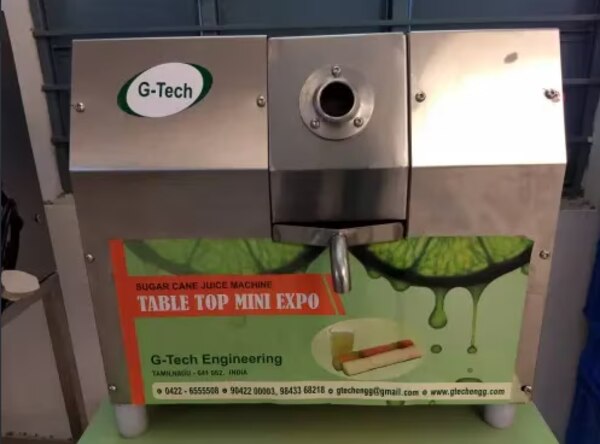
 | G-Tech cane juicer Table Top Mini It is a table top economical model, compact to use. View product → |
 | G-Tech cane juicer Stand with bin model This machine is very attractive, compact and high effective in production. It has inbuilt dustbin inside the table of the machine. View product → |
Frequently asked questions
How should peeled sugarcane be prepared before it reaches the juicer?
Send cane that is clean, sound, dry on the surface, and cut to lengths and diameters that fit the juicer feed throat. Remove loose peel, grit, damaged sections, and pieces that can bridge the inlet.
Which symptoms show that peeling is causing poor juicer performance?
Look for uneven feeding, repeated jams, rising motor load, reduced juice flow, excess fibre in juice, roller slippage, and peeler fragments entering the feed throat. These signs point to inconsistent cane size, retained peel, wet surfaces, or damaged cane.
What should you check first when the commercial cane machine stops or overloads?
Isolate power before inspection. Remove the cane blockage, then check the feed throat, roller gap, scraper, guards, belt or coupling, and motor overload indicator. Do not restart until the rollers turn freely and the cause of the overload is corrected.
How do you clean and sanitize a peeler-to-juicer line without creating new faults?
Stop and isolate both machines, remove cane residue, and wash product-contact parts with potable water and a food-safe detergent. Rinse, apply the sanitizer at its label concentration, and dry exposed metal, bearings, motors, switches, and control panels before reassembly.
Is a separate sugarcane peeler worthwhile for your operation?
Compare labour saved, preparation consistency, throughput, water use, maintenance, power demand, cleaning time, and rejected cane. A separate peeler earns its space when manual peeling limits output or causes recurring juicer jams; it is a poor fit when volume is low and cleaning overhead dominates.
Related product
 | G-Tech cane juicer Table Top ( Model : TT- 500 Mini ) Table Top 0.5 HP This Machine Is Design For Easy To Carry. In This Machine We Can Get Maximum 60 Litres of Juice/Hr. View product → |
Keywords