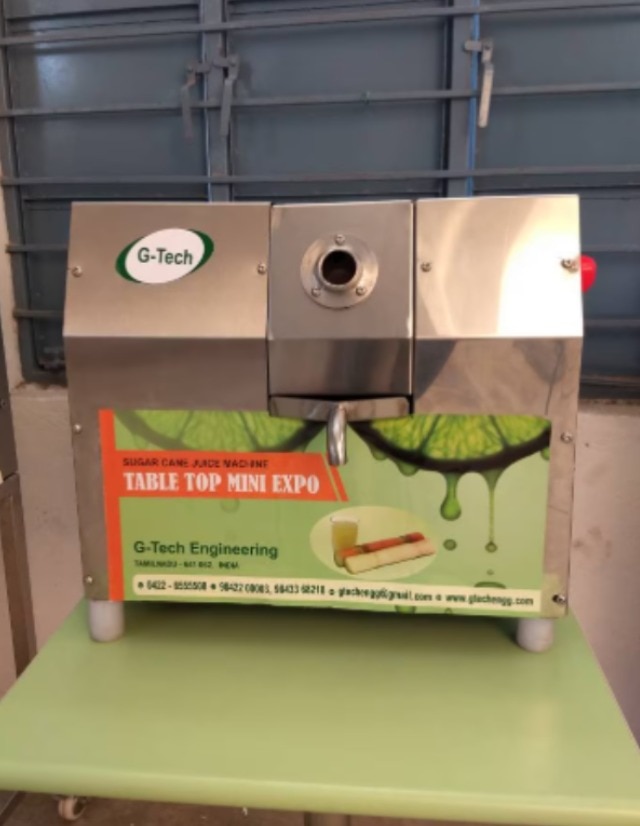
Cane fibre, diluted juice, hard-water scale, dust and trapped moisture can damage a commercial juicer long before a visible breakdown. By following a defined cleaning sequence, checking rollers and electrical parts, and recording faults, you can keep the machine hygienic, safe and ready for service while knowing when routine upkeep is no longer enough.
Key takeaways
- Switch off, isolate power and remove sugarcane before cleaning.
- Rinse sugar residue from rollers, scrapers, screens and the juice path after every shift.
- Inspect roller wear, scraper alignment, leaks, loose fasteners and cable damage before reassembly.
- Protect the machine from Coimbatore humidity, rain splash and standing water.
Clean the machine safely after every shift
Follow this routine for bin sugarcane juicer machine care in Coimbatore after every shift. Cleaning only when the machine looks dirty leaves sugar residue that supports microbial growth and attracts insects.
1. Switch off the machine, unplug it or open the local isolator, and confirm that the rollers cannot start. Never spray or pressure-wash the motor, switch, control panel, wiring, cable glands, gearbox, bearings or shaft seals.
2. Remove trapped cane fibre with a food-safe brush or scraper. Take off only the rollers, scraper, juice tray and compartment parts identified as removable in the machine manual.
3. Wash the feed chute, cane-contact bin, rollers, scraper and juice path with potable water and the detergent concentration specified for the equipment. Rinse thoroughly, apply a food-safe sanitiser at the chemical supplier’s stated concentration and contact time, then rinse again when the label requires it.
4. Clean the dustbin separately. Empty it between customers when full and at least once every shift; wet fibre quickly creates odour and attracts insects. Inspect drain openings for fibre plugs, sticky juice and white scale.
5. Wipe the table and exterior with a controlled damp cloth. Leave the bin, tray, roller area and removable parts open, drained and fully dry before reassembly.
Between customers, remove visible fibre, wipe spills and check that no diluted juice remains in the tray. Do not leave cane residue overnight, use abrasive pads, or seal damp parts under plastic.
Check rollers, scrapers and the juice path before reassembly
A roller is not ready for reassembly because it looks clean. For bin sugarcane machine maintenance in Coimbatore, inspect every crushing roller for sticky residue, dents, cracks, corrosion, scoring and uneven wear, then connect those marks to operating symptoms.
1. Check for cane slipping, wet fibre left on the roller, falling extraction, unusual noise, vibration, overheating or reduced output. These signs point to wear, misalignment or excessive pressure.
2. Inspect scraper clearance along the roller. Tight contact can score the surface and overload the drive; excessive clearance carries wet fibre toward bearings or into the next batch. Replace worn scrapers and distorted guards instead of bending them repeatedly.
3. Examine the juice compartment, outlet and drain path for fibre plugs, leaks and white hard-water scale. Remove scale only with a stainless-steel- and seal-compatible descaler, then rinse thoroughly with potable water.
4. Reinstall only fully dry parts. Seat each roller completely, refit retainers and guards, and confirm that the rollers are parallel with no unsafe gap.
5. Set roller gap and pressure only by the manufacturer’s adjustment procedure. Do not keep tightening pressure to compensate for poor extraction; excessive nip pressure increases motor, bearing and shaft load.
Before starting, rotate the assembly by the approved manual method. Secure every guard and run a short empty test. Stop immediately if you hear rubbing, see wobble, observe slipping cane, or find leakage toward a bearing, gearbox or motor.
Schedule lubrication, electrical checks and Coimbatore weather protection
Before each shift, test the emergency stop, guards, fitted interlocks, earthing connection, plug or isolator, cable glands and visible insulation. Treat a bypassed guard, improvised electrical joint or damaged insulation as a defect; do not operate until corrected.
1. Keep the electrical enclosure closed and dry during operation. If an overload trips, investigate heat, current, vibration and deteriorating terminals before resetting it. Repeated resets can turn a developing electrical fault into a fire or motor failure.
2. Once a week, or at the interval stated in the manual, inspect fasteners, belt tension and wear, shaft seals, scraper mounting and roller parallelism. Lubricate only the named bearings, drive or gearbox points, using the specified grade and quantity.
Keep oil and grease away from rollers, the bin, juice channels and every product-contact surface; over-greasing raises bearing temperature and pushes grease through seals.
3. Schedule a deeper sanitation clean for hidden recesses and drain paths. If white scale returns on the bin, tray or rollers, test the water supply, use a stainless-compatible descaler approved for seals and plated parts, and finish with a potable-water rinse.
4. For sugarcane juicer care in Coimbatore, provide ventilation and a dry, covered location away from dust, roadside spray and monsoon moisture. Wipe condensation promptly, drain and dry the machine before overnight storage or transport, protect it from pests, and never wrap damp components in plastic. Sanitise again before production.
Match a bin setup to the site, workload and cleaning resources
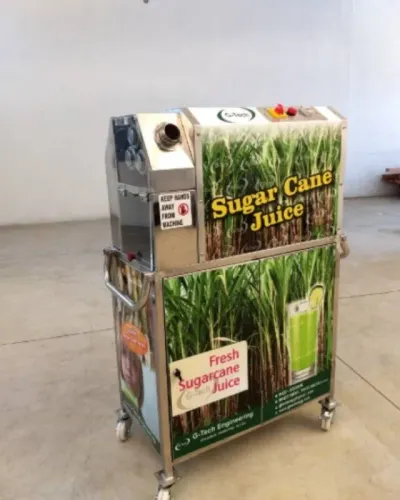
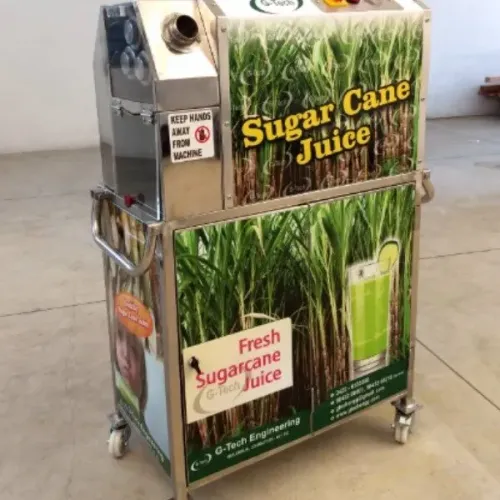
An inbuilt bin suits a food court or controlled shop only when staff can empty and wash it frequently. Compare the site, daily cane volume and cleaning resources before choosing: a compact bin saves floor space but leaves less margin during a rush.
| Setup | Check before choosing | Likely consequence |
|---|---|---|
| Controlled shop or food court | Counter or floor space, ventilation, protected power, potable water, drainage and service clearance | An inbuilt bin works when staff can empty, wash, sanitise and dry it during the shift |
| High-volume outlet | Daily cane volume, rush duration, bin capacity, waste-container access and drain capacity | Use a larger or separate container if fibre could overflow, block drainage or create extra downtime |
| Roadside or mobile stall | Stable waste handling, protected electrical supply, clean water, wastewater collection, transport restraints and protection from dust or rain | An integrated bin does not replace waste collection, drying, weather protection or safe transport |
Estimate the complete commercial cane juicer upkeep load: stop and isolate power, dismantle, remove fibre, wash, rinse, sanitise, dry and reassemble. Parts being removable does not guarantee a short clean; hidden recesses and wet fibre can extend downtime.
Ask G Tech Engineering, or any competing supplier, for the actual model’s operating manual and electrical limits, permitted cleaning chemicals, sanitiser concentration and contact time, roller-adjustment method, lubrication points, service intervals and replacement-part list. Request service access in Coimbatore as well. Choose the arrangement your busiest-shift staff can empty, drain and dry reliably.
Related products
 | Juicer Machine Sugarcane Juicer Machine ( Bin Model -1000) Sugarcane Juicer Machine ( Model : Bin - 1000) It is Very Attractive, Compact and High Effective in Production.It has Inbuilt Dustbin Inside The... View product → |
 | G-Tech cane juicer Stand with bin model This machine is very attractive, compact and high effective in production. It has inbuilt dustbin inside the table of the machine. View product → |
Use a staff checklist and escalate defects before failure
A signed checklist assigns routine work and identifies defects before they stop production.
1. Opening staff should record the date, operator, machine hours, power reading, safety-check result, roller condition, scraper clearance, belt condition, leaks, unusual sound, vibration and visible damage.
2. Closing staff should record fibre removal, bin and juice-compartment cleaning, detergent and sanitiser used, drain inspection, drying completion and every replacement part fitted.
3. A supervisor should review the log for slower throughput, rising motor temperature, repeated roller slipping, increasing juice leakage and more frequent overloads. Compare readings with the nameplate and machine manual, not a generic current value.
Operators may isolate power, empty the bin, clean food-contact parts and report defects. A qualified technician must perform electrical testing, insulation or earthing checks, motor-terminal work, gearbox repairs, bearing replacement, shaft-seal repairs, roller alignment, structural repairs and control-panel work.
Remove the machine from service for exposed wiring, a failed emergency stop, a bypassed guard, cracked rollers, an unsafe gap, severe corrosion, a damaged frame, persistent overheating, liquid entering the motor area or juice leaking toward bearings. Do not let an operator improvise a repair or repeatedly reset an overload.
Follow the exact manual for voltage, current, cleaning chemicals, contact times, adjustment limits and service intervals. Keep repair dates, fault descriptions, technician findings and parts replaced with the cleaning log. Sanitise the machine again before production after any repair or prolonged non-use.
Frequently asked questions
How should you clean a bin sugarcane juicer machine after every shift?
Switch off and isolate the machine, remove cane pieces, dismantle removable food-contact parts, wash away sugar residue, sanitise as directed, and dry every part before reassembly.
What should you inspect before reassembling a commercial cane juicer?
Check rollers for grooves or damage, scrapers for wear and alignment, screens and trays for blockage, seals for leaks, and fasteners for looseness.
How often should you lubricate and electrically inspect a bin sugarcane machine?
Follow the manufacturer’s lubrication intervals, use only specified food-safe lubricant where required, and inspect switches, plugs, cables, earthing and the motor routinely.
How do you protect a sugarcane juicer in Coimbatore weather?
Keep the machine under cover, prevent rain splash and standing water, maintain airflow while it dries, and use a suitable protective cover only after the machine is clean and dry.
Keywords