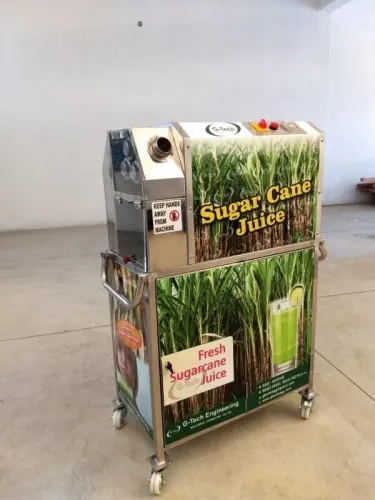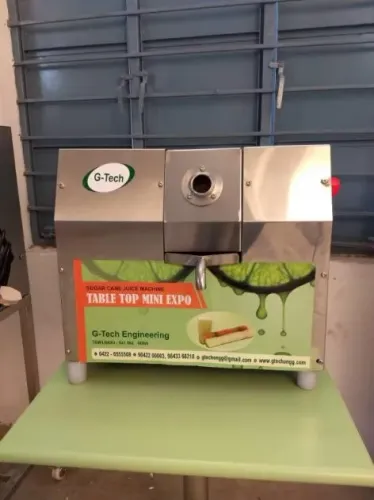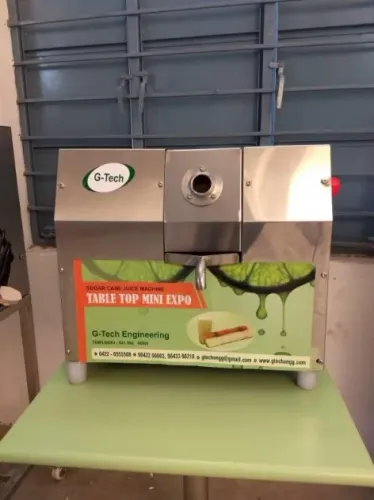
The tabletop-versus-stand decision is really a question of station design, not a choice between small and large machines. Measure the counter, map the complete juice workflow, and compare verified operating and installation requirements before selecting the format that will produce the most saleable cups with the least disruption.
Key takeaways
- Measure saleable glasses per hour, not the machine’s 60-litre claim.
- Choose the format that keeps cane, filtering, serving and waste within reach.
- Confirm electrical load, earthing, guards and cleaning access before ordering.
- Demand written specifications for output, materials, warranty and installation.
Choose the Format That Fits the Entire Juice Station
Choose the format that keeps cane preparation, crushing, filtering, serving, and waste removal in one uninterrupted flow. For cooking mixer machine businesses, tabletop or stand sugarcane juicer labels describe installation, not performance.
| Option | Best fit | Main trade-off |
|---|---|---|
| Tabletop sugarcane juicer | A rigid, washable counter has room for the machine, cane, filtration, cups, ice, and payment equipment | Add the support table to footprint, cost, cleaning effort, stability, and operating height |
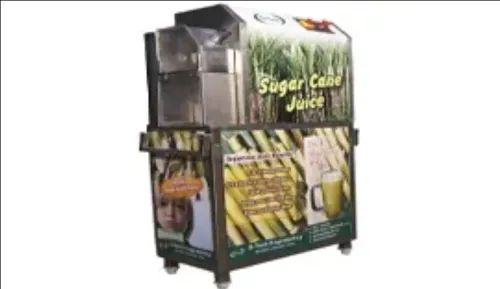
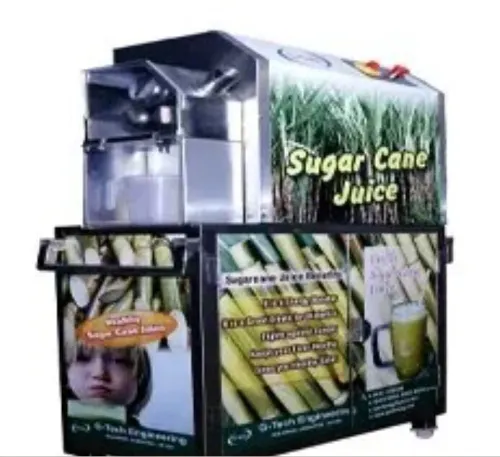
| Stand sugarcane juicer | A dedicated feed, collection, and waste station is needed while preserving counter space | The frame consumes floor area and can block mopping routes or wall access |
Measure the counter width and depth, clearance above the machine, customer-facing space, operator standing room, outlet position, and the route for bringing it in or removing it for service. Check feed height and cup-filling height together; a tall frame can still force awkward lifting or reaching.
A tabletop unit fails its purpose if the support table displaces cane storage or leaves a dirty, inaccessible underside. A stand sugarcane juicer earns its larger footprint only when its feed height, bagasse route, and collection position remove a real bottleneck.
Specify roller diameter and material, feed opening, permitted cane length, dimensions, operating height, rated throughput, motor duty, electrical supply, waste capacity, and sanitation access. Treat the format as a layout decision, then compare the complete station rather than the machine label.
Compare Saleable Output, Not the 60-Litre Claim
A 60-litre-per-hour rating measures crushing, not saleable cups during a shift. Calculate cups from your actual cup size after cane feeding, worker breaks, replenishment, filtration, serving, cleaning, jam recovery, and peak-hour queues.
| Comparison point | Tabletop sugarcane juicer | Stand sugarcane juicer |
|---|---|---|
| Saleable output | Can match a stand unit when feeding and serving are fast | Wins only when dedicated height and waste handling remove a bottleneck |
| Space effect | Preserves floor space but consumes counter area | Frees counter area but adds floor obstruction and cleaning |
| Best test | Measure cups after support-table setup and interruptions | Measure cups after waste removal and operator movement |
Record how many stalks the feed opening accepts, whether each stalk needs trimming or repeated passes, and how much fibrous waste remains. Yield changes with cane variety, freshness, moisture, roller pressure or gap, feed consistency, and crushing passes; request test conditions naming the cane condition and number of passes.
- Ask for permitted stalk length, feed-opening dimensions, rated duty cycle, continuous operating time, and expected waste for fresh, named cane.
- Model one operator feeding, filtering, filling cups, taking payment, and removing bagasse; the slowest task sets station capacity.
- Do not use motor horsepower alone to compare cooking mixer machine businesses tabletop or stand sugarcane juicer options. Compare the complete commercial juice counter equipment workflow instead. A stand earns its footprint only when it removes a measured queue or waste bottleneck.
Design Waste, Hygiene, and the Operator Workflow Together
Make the station move in one direction: raw cane enters, finished juice exits, and waste leaves without crossing either path. This layout matters more than a machine’s label for commercial juice counter equipment.
- Receive cane and store raw stalks away from finished cups, ice, and filtered juice.
- Trim damaged ends into a designated waste container.
- Feed stalks with both hands outside the roller nip.
- Direct juice into a covered collection vessel, filter it before filling, and serve the cup.
- Move bagasse into its designated container without crossing the cup or ice area.
An integrated bin can shorten waste handling. Before choosing one, verify its usable volume, liner size, emptying frequency, washing access, and whether wet fibre bridges across the opening or blocks the operator’s feet or bagasse outlet. A stand sugarcane juicer earns its space only when this route remains clear.
Specify smooth, corrosion-resistant, nonabsorbent food-contact surfaces. Require access to rollers, scraper zones, juice chutes, drip trays, guards, fasteners, seals, and internal drainage; a stainless-steel exterior proves none of this by itself. Sugar-rich juice film attracts insects and lengthens cleaning, so inaccessible residue becomes a peak-hour capacity loss.
Document jam clearing: stop the machine, isolate power, wait for all movement to stop, then lock out the supply before removing rollers or reaching into the crushing area. Cleaning access and safe recovery belong in the productivity comparison, not as afterthoughts.
Check Safety and Electrical Installation Before Ordering
A machine that fits the counter can still fail commissioning if its outlet, breaker, earthing, or cleaning procedure is unsuitable. Use one written checklist for a tabletop sugarcane juicer and a stand sugarcane juicer.
1. Request a safety and installation sheet for the exact model and configuration. Confirm the emergency stop or accessible isolator, narrow feed opening, roller guards, nip-point protection, safe hand position, water-separation measures, jam procedure, and lockout method before cleaning or removing rollers.
2. Ask the supplier to state the rated voltage, frequency, phase, running current, motor duty rating, plug or hard-wiring requirement, breaker or fuse rating, cable protection, ingress-protection rating, and local electrical certification. Do not infer suitability from motor wattage or a single-phase label.
3. Have an electrician confirm that the outlet carries the running load without nuisance tripping and sits outside splash and wash-down zones. Check whether an extension lead is prohibited, whether a dedicated circuit is required, and how the equipment is earthed.
4. For sanitation claims, request the exact certification listing, such as an NSF/ANSI 8 listing where offered. Verify that the supplied rollers, guards, electrical parts, and accessories fall within its scope; a generic commercial juice counter equipment claim proves nothing.
5. Keep the written checklist with the purchase file. It exposes an unsuitable outlet, breaker, earthing arrangement, or cleaning procedure before either format reaches your counter.
Turn Supplier Specifications Into a Defensible Purchase Decision
A 60-litre-per-hour claim does not tell you how many saleable cups reach customers. Cooking mixer machine businesses choosing a tabletop or stand sugarcane juicer must count trimming, feeding, filtration, filling, bagasse removal, cleaning, breaks, queue delays, and jam recovery.
Put every shortlisted model on one sheet and record:
- Roller diameter and material; feed opening; permitted cane length; rated throughput; yield-test conditions; motor duty; dimensions; operating height; bin volume; cleaning access; waste route; electrical data; certification scope; service access; jam-recovery time.
- Add the price, footprint, stability, and cleaning effort of a rigid washable support table to a tabletop unit.
- Compare that total with the stand model’s floor obstruction, relocation route, operator posture, dedicated waste handling, and under-frame cleaning.
| Option | Productivity advantage | Cost or risk to verify |
|---|---|---|
| Tabletop | Uses an existing counter and stores easily between intermittent shifts | Loses counter space; support-table cost, height, stability, and waste handling can erase its apparent saving |
| Stand | Provides a dedicated feed, collection, and waste station for sustained work | Occupies floor space; inspect the cleaning route beneath the frame and its path through doors |
| Decision test | Count filtered cups after preparation, service, cleaning, and maintenance | Reject headline capacity that fails a full operating cycle |
Ask each supplier to demonstrate trimmed cane through filtered cup and bagasse removal, not an unloaded motor test. G Tech Engineering belongs in the comparison when its exact model datasheet answers these points in writing. Choose tabletop when space, intermittent demand, and storage flexibility dominate; choose stand when permanent placement and sustained workflow justify installation.
That is the defensible commercial juice counter equipment decision.
Related products
 | G-Tech cane juicer Table Top Mini It is a table top economical model, compact to use. View product → |
 | G-Tech cane juicer Table Top ( Model : TT- 500 Mini ) Table Top 0.5 HP This Machine Is Design For Easy To Carry. In This Machine We Can Get Maximum 60 Litres of Juice/Hr. View product → |
Frequently asked questions
Should cooking mixer machine businesses choose a tabletop or stand sugarcane juicer?
Choose a tabletop sugarcane juicer when counter space, portability and direct access to the service area matter. Choose a stand sugarcane juicer when the station needs a dedicated footprint, working height or more organised waste handling.
Why is a 60-litre capacity claim not enough to compare juicers?
A capacity claim does not show saleable output. Compare juice recovered per cane batch, filtering time, loading and unloading time, operator breaks, cleaning time and the number of finished glasses your station can serve per hour.
What should you check before installing commercial juice counter equipment?
Check the machine’s voltage, phase, rated power, plug or isolator requirement, earthing arrangement, floor or counter strength, clearance for cleaning and access to the waste container. Confirm the required installation details in writing with the supplier.
How should hygiene affect the choice between a tabletop and stand juicer?
Select the format that lets the operator separate raw cane, extracted juice, filtered juice and waste without crossing the serving path. Inspect whether rollers, juice-contact surfaces, filters and drain areas can be removed and cleaned after service.
Related products
 | G-Tech cane juicer Stand with bin model This machine is very attractive, compact and high effective in production. It has inbuilt dustbin inside the table of the machine. View product → |
 | Juicer Machine Sugarcane Juicer Machine ( Bin Model -1000) Sugarcane Juicer Machine ( Model : Bin - 1000) It is Very Attractive, Compact and High Effective in Production.It has Inbuilt Dustbin Inside The... View product → |
Keywords