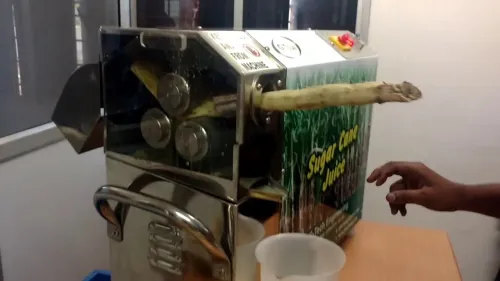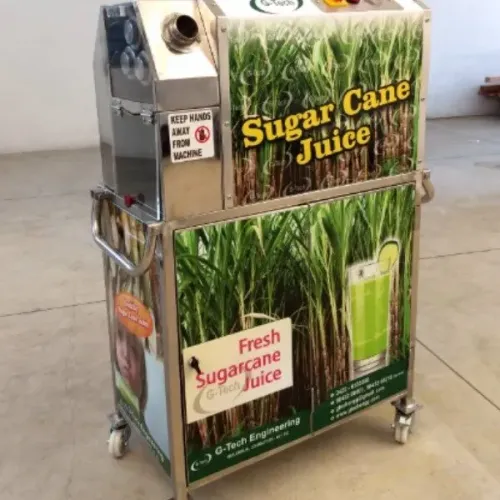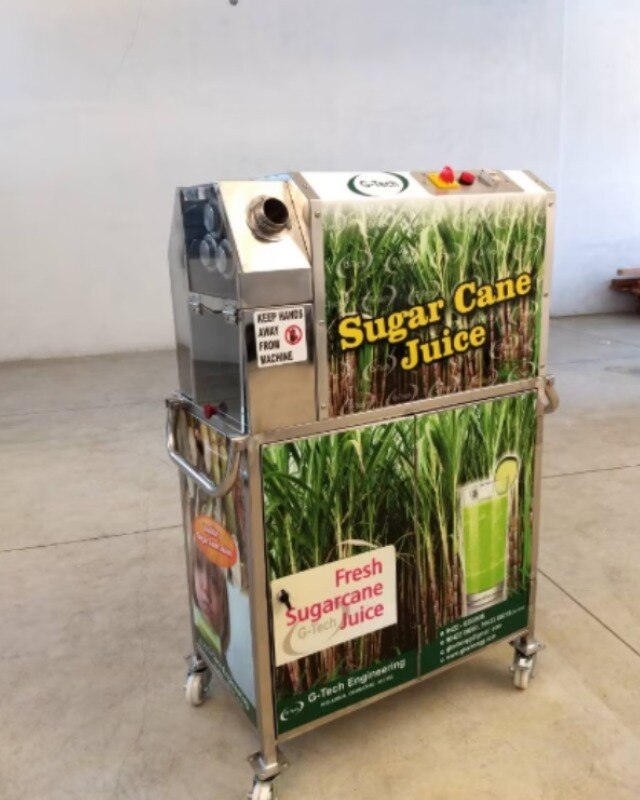
Sugar, water and cane fibre quickly form a sticky, contaminated film inside roller gaps, scraper channels and juice drains. By following a power-isolated cleaning routine, checking the crushing assembly before each shift and scheduling inspections beyond daily washing, you can keep the machine hygienic, safe and productive.
Key takeaways
- Unplug the machine and wait for every roller to stop before cleaning.
- Remove wet bagasse and sugary residue after every service period.
- Inspect rollers, guards, fasteners and the power cord before starting.
- Record cleaning, lubrication, faults and repairs in a service log.
Clean the Machine After Every Service Period
Good table top cane machine care starts with power isolation, not a damp wipe. Switch off the motor, unplug it, and wait until every roller stops before opening the unit. Remove bagasse promptly; wet fibre and sugary juice left overnight attract insects, ferment and create odours.
- Remove the hopper, scrapers, juice tray and other food-contact parts that the manufacturer permits you to remove. Do not remove guarded components without the service instructions.
- Scrape cane fibre from roller grooves, shaft ends, scraper faces, drains and the juice outlet before adding water. This loosens residue that a rinse alone leaves behind.
- Wash removable parts and accessible food-contact surfaces with a detergent approved for food equipment. Use a brush for roller gaps and crevices, then rinse with potable water.
- Wipe the motor housing, switches, wiring, bearings and seals with a controlled damp cloth. Never direct a high-pressure spray into these areas; forced water can carry contaminated liquid into housings.
- Apply the approved food-contact sanitiser at its stated concentration and contact time. A stronger mix is not safer if it leaves chemical residue.
- Drain the juice path and leave parts open until completely air-dry. Store clean removable parts under protection from dust, not inside a covered, damp machine.
- Reassemble only after checking for pitting, deep scratches, peeling coatings, corrosion stains or loose weld crevices. Replace or repair any surface you cannot clean fully; polishing over a pit does not restore hygienic cleanability.
This sequence is central to tabletop sugarcane juicer maintenance, especially around the roller assembly where fibres hide. Clean the nearby floor and keep bagasse bins covered without splashing dirty water back onto the machine.
Use a Cleaning and Food-Safety Schedule
A written schedule is the backbone of sugarcane juice machine upkeep in Coimbatore. Tie each task to a service period, shift, or calendar day so sticky residue and wet bagasse never remain until the next opening.
- After every service period: remove bagasse from the rollers, scraper faces, juice outlet, and surrounding floor. Wipe spills immediately and keep the waste container covered.
- At the end of every production shift: complete the full clean-down. Wash juice-contact parts with food-equipment detergent, rinse with potable water, apply the approved sanitiser for its stated concentration and contact time, then drain and air-dry.
- After each shift: check roller shaft ends, grooves, scraper channels, and narrow juice passages for trapped fibres. A clean hopper does not prove the roller assembly is clean.
- Daily before closing: clean the floor without splashing dirty water onto the machine, and wash the waste container before replacing its cover.
- Weekly: inspect strainers, drains, scraper edges, fasteners, and seals. Remove mineral scale with a chemical approved for the machine’s materials.
- At the manufacturer’s maintenance interval: inspect bearings, gearbox, wiring, guards, and drive parts. Keep lubricant away from the juice path; use NSF H1 lubricant where incidental food contact is possible.
Record the date, operator, detergent, sanitiser concentration, and corrective action. Never use steel wool, excessive chlorine, or hydrochloric-acid cleaner on stainless surfaces.
Inspect the Rollers and Machine Before Starting
Start with the power off and the plug disconnected. A tabletop sugarcane juicer maintenance check must cover the hidden roller assembly, not only the hopper and outer panels.
1. Check the power cable, plug, switch, motor housing and earthing lead for cuts, loose connections, water marks or overheating. Confirm that every guard is secure, the coupling is covered and the interlock works. Do not run the machine with a damaged cable, exposed drive or defeated interlock.
2. Inspect the roller shaft ends, grooves, scraper faces and the area behind each scraper. Cane fibres wrap around shafts and compact in narrow gaps, restricting rotation and pushing rollers out of alignment. Remove a guard or clear a jam only after isolating the electrical supply and preventing accidental restart.
3. Examine every juice-contact surface for pitting, deep scratches, corrosion staining, peeling coating and loose weld crevices. If you cannot clean a defect completely, repair or replace the part; polishing over a pit does not restore hygienic cleanability.
4. Turn the rollers by hand only while the machine is isolated. Look for rough spots, tight sections, wobble, unusual end play or metal-to-metal contact. Squealing, vibration, hot bearings or dark filings indicate a roller, bearing or drive problem that needs service before operation.
5. Check roller clearance and parallel alignment against the maker’s specification, never by feel. Excessive nip overloads the motor and gearbox; excessive clearance leaves wet bagasse, while uneven spacing pulls cane sideways into the guard.
These checks are practical table top cane machine care, especially after each shift and before the next service period.
Handle Lubrication, Electrical Safety and Preventive Maintenance
Use only food-grade NSF H1 lubricant on bearings or drive points specified by the manufacturer. Keep grease and oil away from rollers, scrapers, juice channels and other food-contact surfaces; lubricant there can contaminate the drink. Wipe excess from fittings so sugarcane fibre cannot stick and form a buildup.
Disconnect the plug before clearing wrapped cane, removing a roller guard or reaching near the coupling. Prevent accidental restart by keeping the plug under your control, and never run the machine with a missing or defeated interlock, loose guard, exposed coupling or damaged power cable.
A tabletop footprint does not remove the crushing and entanglement hazard.
- Check shaft ends, scraper faces, roller grooves and the outlet for trapped fibre.
- Inspect food-contact surfaces for pitting, deep scratches, loose weld crevices, peeling coatings and corrosion stains.
- Replace or repair any surface that cannot be fully cleaned; polishing over a pit does not restore hygienic cleanability.
- Match replacement rollers, scrapers and fasteners to the original material. Stainless steel juice parts do not prove that the frame or drive uses stainless steel, and dissimilar metals can create corrosion during wet cleaning.
Preventive tabletop sugarcane juicer maintenance needs a written log. Record cleaning completion, sanitiser test-strip results, roller condition, abnormal noise or vibration, gearbox-oil condition, bearing lubrication, electrical checks and replaced parts. Rising motor current, gearbox temperature, vibration or wet bagasse can signal alignment, bearing or drive trouble before a breakdown.
Adapt Maintenance to Coimbatore Conditions and Keep a Service Log
Coimbatore’s hard water can leave mineral scale on stainless surfaces, strainers and narrow juice passages. For table top for sugarcane machine maintenance in coimbatore, use only a descaler approved for the machine materials; never use hydrochloric acid, steel wool or excessive chlorine, then rinse thoroughly with potable water.
Remove bagasse from the rollers, scraper channels, outlet and surrounding floor promptly. Moist, sugary waste attracts insects and ferments overnight, so keep waste bins covered and clean the floor without splashing dirty water onto food-contact parts. Wet bagasse leaving the machine is also an early sign of poor roller alignment, wear or blocked drainage.
Record each shift’s clean-down, including detergent and sanitiser details, sanitiser concentration or test-strip result, roller and scraper condition, unusual noise or vibration, gearbox oil, bearing lubrication, electrical checks and replaced parts. Compare readings over time: rising motor current, gearbox temperature or vibration identifies trouble earlier than a breakdown.
- Check water scale weekly and schedule material-safe descaling when deposits narrow passages or dull surfaces.
- Note the date, fault, action taken and technician’s name after every repair.
- Ask G Tech Engineering for the correct descaler, lubricant, replacement parts, service interval and wiring information for your model rather than adapting advice for another machine.
This record turns sugarcane juice machine upkeep in coimbatore into a traceable decision, not a guess.
Related products
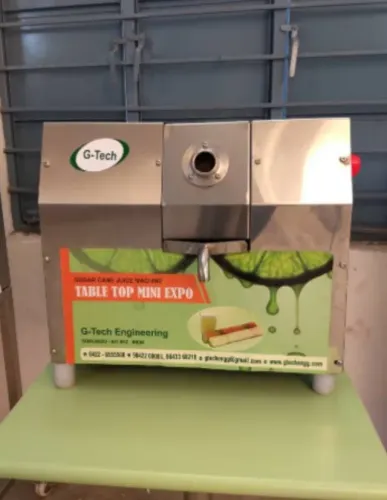
 | G-Tech cane juicer Table Top Mini It is a table top economical model, compact to use. View product → |
 | G-Tech cane juicer Table Top ( Model : TT- 500 Mini ) Table Top 0.5 HP This Machine Is Design For Easy To Carry. In This Machine We Can Get Maximum 60 Litres of Juice/Hr. View product → |
Frequently asked questions
How should you clean a tabletop sugarcane machine after service?
Switch off and unplug the machine, wait for the rollers to stop, remove bagasse, and clean sugary residue before it dries. Keep water away from the motor, switches and electrical connections.
What should you inspect before starting a sugarcane juice machine?
Check the rollers, guards, fasteners, feed opening, power cord and plug. Confirm that no bagasse, tools or loose parts can enter the roller assembly.
How often should a tabletop sugarcane juicer be maintained?
Clean it after every service period, inspect it before each start, and follow a scheduled plan for lubrication, electrical checks and preventive servicing.
How can Coimbatore conditions affect sugarcane machine upkeep?
Heat, humidity, dust and monsoon moisture increase the need for thorough drying, protected electrical connections and regular inspection. Record local operating conditions and each maintenance task in a service log.
Keywords