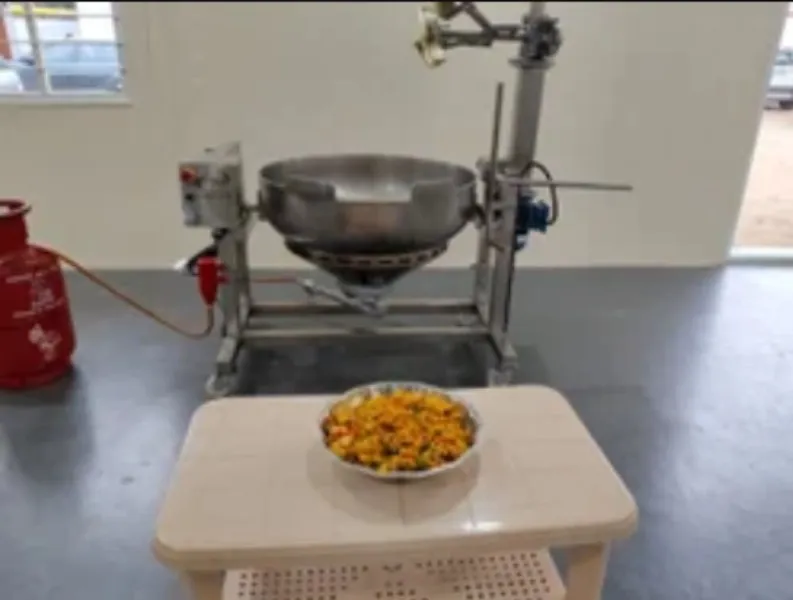
Large-batch cooking becomes difficult when ingredients require continuous mixing while being heated. Manual stirring can consume labour, create physical strain and become increasingly impractical as vessel size grows. An Industrial Cooking Mixer Machine combines cooking and mechanical mixing to support larger-scale food production.
For manufacturers and commercial kitchens in Coimbatore, choosing such equipment should begin with the product rather than the machine.
What Will You Cook?
Cooking mixers can be considered for various food preparations, but product characteristics differ dramatically.
A thin sauce behaves differently from thick halwa, kova or other high-viscosity foods. Buyers should explain the intended recipe, ingredients and final consistency to the equipment manufacturer.
Important information includes:
- Batch size
- Product viscosity
- Cooking temperature requirements
- Mixing duration
- Number of daily batches
- Ingredient characteristics
- Required discharge method
These factors influence the appropriate equipment configuration.
Choose Capacity Carefully
Capacity should support production without creating unnecessary investment.
Manufacturers planning expansion may want some additional capacity, but purchasing a dramatically oversized unit can affect floor-space requirements, utilities and capital cost.
Use actual production records and realistic sales forecasts to establish the required range.
Understand the Mixing System
The mixing mechanism is central to the machine's function.
Its purpose is not simply to move ingredients around the vessel. Depending on the application, effective mixing can help ingredients circulate during heating and reduce the need for continuous manual stirring.
Ask how the proposed mechanism suits the specific product being manufactured.
Examine Cleaning and Changeover
Businesses producing several recipes may need to clean equipment between batches or products.
Before buying, understand how the vessel, mixing components and discharge area are cleaned. Faster, practical changeovers can be important for facilities with varied production schedules.
Check Utilities and Installation Requirements
Confirm electrical load, heating requirements, floor space and operator clearance before placing an order. Planning these details early reduces installation difficulties later.
Tamil Nadu has a substantial food-processing sector, and Coimbatore's engineering ecosystem supports businesses seeking locally manufactured production equipment. G Tech Engineering serves commercial food-processing requirements where cooking and mixing need to be mechanised.
A suitable industrial cooking mixer should be selected through a technical discussion about the actual product and production process.
Businesses ready to purchase should prepare their batch specifications, current output, expected growth, available utilities and installation dimensions. This allows different machine options to be evaluated on operational suitability and long-term value rather than headline capacity alone.
Keywords