Low juice output, repeated jams, motor trips and foul-smelling bin waste usually have a specific cause: cane condition, roller adjustment, electrical supply, cleaning or feeding technique. By the end, you will know what to inspect first, how to clear faults safely, and which machine specifications matter at a roadside stall.
Key takeaways
- Check cane quality, feed angle and roller clearance before assuming machine failure.
- Switch off and isolate power before clearing a jam or refitting rollers.
- Clean the bin as a food-contact surface after every operating shift.
- Specify voltage, throughput, drainage and roadside protection before choosing a machine.
Match the symptom to the likely cause
Low juice output does not automatically mean a failed machine. Sugarcane juice machine problems for street vendors using bin models often begin with cane that is dry, thick, overripe, badly cut or fed at the wrong angle.
| Symptom | Likely cause | Machine or cane? |
|---|---|---|
| Low juice, dry bagasse | Cane lacks moisture, or the roller gap is too wide | Cane first; test gap with a fresh piece |
| Slow crushing or choking | Gap is too tight, cane diameter is excessive, or rollers carry fibre | Machine setting or feed size |
| Roller slipping | Wet, worn or loose drive belt; smooth rollers clogged with fibre | Machine |
| Cane bridging in the throat | Long, untrimmed stalks or irregular pieces | Cane preparation |
| Motor overheating or electrical trips | Excessive load, repeated resets, low voltage or poor ventilation | Machine or supply |
| Loud noise or vibration | Loose bearing, roller, belt or mounting fastener | Machine |
| Juice leaking or bin overflowing | Blocked drain, displaced strainer or fibre-packed outlet | Cleaning or machine fit |
The bin does not meter cane reliably. Cut pieces to a consistent length, use the guarded feed throat and keep fingers away from rollers; use a pusher instead. These are common bin sugarcane juicer vendor problems, not proof that the cane alone is responsible.
A removable bin and smooth outlet also make trapped soil, insects and splash-back easier to find and clean.
Use a fixed troubleshooting sequence before calling for service
Stop feeding cane, switch off the machine and isolate the power before touching any part. Do not keep resetting a tripped motor; an obstruction or voltage sag can overheat the winding, starter or gearbox. Use this sequence for commercial sugarcane juice machine issues:
1. Check the supply first. Inspect the plug, cable, switch, overload relay and distribution board for burning, looseness or repeated trips. Keep water away from electrical controls.
2. Inspect the bin outlet and feed throat for cane pieces, fibre, soil or a foreign object. Keep your hands away from the rollers; clear anything only after isolation, using the approved pusher or tool.
3. Look at the belt and guards. A slack, cracked or slipping belt explains slow crushing, while excessive vibration, grinding or play at a roller end points to a bearing problem.
4. Examine roller cleanliness and gap. A tight gap overloads the motor and chokes on thick, hard cane; a wide gap leaves juice in the bagasse. Match the setting to cane diameter, moisture, rind hardness and fibre.
5. Check the juice tray, strainer and drain for blockage. Stop immediately if oil or grease reaches the juice path; that is a food-safety defect.
6. Test briefly without cane, then with a small feed. If the fault returns, leave the machine isolated and call service with the symptom, trip timing and any unusual noise recorded.
Clear jams and refit rollers without creating a new fault
Long, untrimmed stalks can bridge the feed opening, while short pieces enter unevenly. These bin sugarcane juicer vendor problems start with inconsistent cane, not always a defective machine. Cut stalks to a consistent length, remove soil and loose fibre, and use the guarded feed throat; never rely on the bin to meter cane.
- Switch off, unplug or isolate the supply, and wait for every roller to stop. Do not pull cane out while the motor is connected.
- Remove loose pieces with tongs or a wooden pusher, keeping your hands outside the guarded opening. Never restart repeatedly against a jam; that can overheat the motor, starter or gearbox.
- Inspect each roller for wrapped fibre, chipped grooves, a bent shaft, uneven wear and juice-hardened residue. Check that bearings turn smoothly and the belt remains seated.
- If a roller has shifted, refit its spacers, bearings and retainers in their original order. Tighten fasteners evenly; do not force a damaged shaft or compensate with improvised shims.
- With power isolated, rotate the rollers by hand and confirm a parallel gap. Test with short, similar cane pieces, then adjust both sides equally until the rollers grip without crushing against each other.
Stop using the machine if vibration, grinding or repeated slipping remains. A damaged roller or bearing needs qualified service.
Control power, heat, vibration and roadside exposure
A nominal 230 V, 50 Hz single-phase supply does not guarantee safe operation. A long, thin extension lead or crowded roadside distribution board can cause voltage drop, making the motor draw more current and run hot.
Use a dedicated correctly rated circuit with earthing, overload protection and a weather-protected plug connection; never compensate with a higher-horsepower motor alone.
Repeated resets do not fix commercial sugarcane juice machine issues. Each restart can stress the motor, switchgear and belt, while a thermal trip signals heat that needs investigation. Stop the machine, isolate the supply and check the lead, plug, ventilation openings, belt load and roller obstruction before restarting.
If the trip returns, keep it out of service.
Street vendors in Coimbatore need protection from rain, dust and roadside splash without sealing the machine in damp heat. Place a canopy over the motor and controls, keep the machine level to limit vibration, and tighten loose guards or mounts before they damage bearings and belts. Do not spray the motor or controls.
After cleaning, leave the machine uncovered in a dry, ventilated position until it is fully dry; covering wet equipment accelerates corrosion and microbial growth.
Clean the bin as a food-contact area, not just a waste compartment
Many sugarcane juice machine problems for street vendors using bin models begin with treating the bin as waste storage. Cane fibre, soil, insects and juice splash-back collect around the outlet, then enter the feed throat or overflow onto the stall.
Clean the food-contact path at set intervals during service:
- Remove loose fibre from the bin, outlet and feed throat before it compacts.
- Switch off and isolate power before removing the internal bin or reaching near rollers.
- Empty spills immediately; wash, rinse and sanitise the removable bin and smooth internal surfaces under your food-safety plan.
- Let parts drain and air-dry before refitting them. Do not use an oily workshop cloth.
- Clear the drainage outlet and tray after washing; a blocked drain sends juice back into the bin and causes overflow.
- Never return unsold juice or fallen cane to the machine.
The strainer needs equal attention. Fine mesh catches more fibre but blinds quickly, reducing flow; coarse mesh slows blockage but lets more fibre into the cup. Remove it without dismantling the rollers, clean it during busy periods, and keep a clean spare ready.
Oil near roller ends or on the juice tray is a contamination defect, not merely one of the bin sugarcane juicer vendor problems.
Specify the machine around your stall’s real operating conditions
A buying brief for street vendors in Coimbatore must describe the cane, power supply and cleaning routine—not just litres per hour. Record your cane’s usual diameter and cutting length, the number of glasses per peak hour, available single-phase voltage, stall space, rain exposure and time available between batches for cleaning.
| Specification | Compare before buying | Why it matters |
|---|---|---|
| Cane and feed | Accepted diameter and length; guarded throat; adjustable roller gap | Long stalks bridge the throat, while short pieces feed unevenly; a tight gap overloads the motor and a wide gap leaves juice in bagasse |
| Drive system | Motor duty, electrical input, overload protection, noise and belt access | Repeated resets and overheating expose an undersized drive |
| Food-contact path | Roller material, bin and juice-contact material, smooth surfaces, removable strainer and drain | Fibre, soil, insects and splash-back collect at the outlet and worsen commercial sugarcane juice machine issues |
| Serviceability | Tool-free bin and feed access; spare rollers, bearings and belts | A worn bearing or roller should not end a trading day |
Ask whether extracted juice stays covered and whether unsold juice can be discarded without returning it to the bin. G Tech Engineering can fit this decision when it documents these operating details and confirms parts access, gap adjustment and cleaning steps for the selected bin model. Test the machine with your actual cane before committing.
Related products
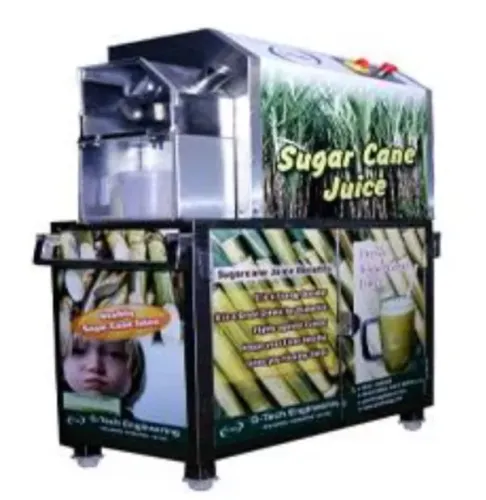
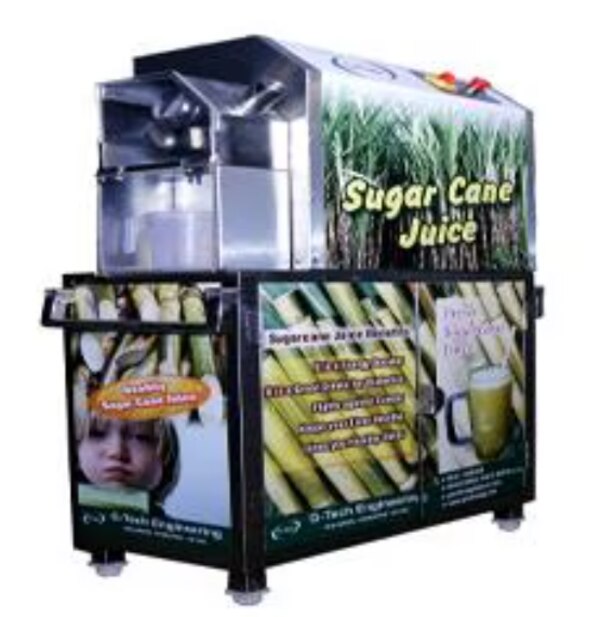
 | Juicer Machine Sugarcane Juicer Machine ( Bin Model -1000) Sugarcane Juicer Machine ( Model : Bin - 1000) It is Very Attractive, Compact and High Effective in Production.It has Inbuilt Dustbin Inside The... View product → |
 | G-Tech cane juicer Stand with bin model This machine is very attractive, compact and high effective in production. It has inbuilt dustbin inside the table of the machine. View product → |
Frequently asked questions
What causes low juice output in a bin-model sugarcane juicer?
Check for dry or overripe cane, thick sections, poor cutting, incorrect feed angle and roller spacing before calling for service.
What should a street vendor do before calling for machine service?
Stop the machine, isolate the power, inspect the feed path, check roller alignment and record unusual noise, heat or vibration.
How do you clear a jam without damaging the rollers?
Disconnect power completely, remove loose cane with a suitable tool, inspect for trapped metal or stones and refit rollers to the specified alignment.
How should the juice collection bin be cleaned?
Treat the bin as a food-contact surface: remove residue, wash with a suitable detergent, rinse with clean water and dry it before reuse.
Keywords