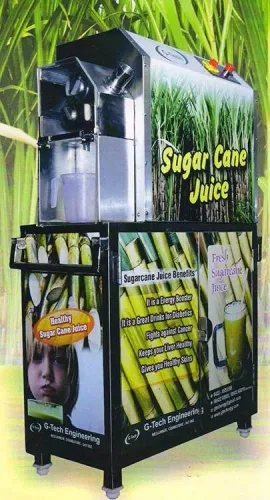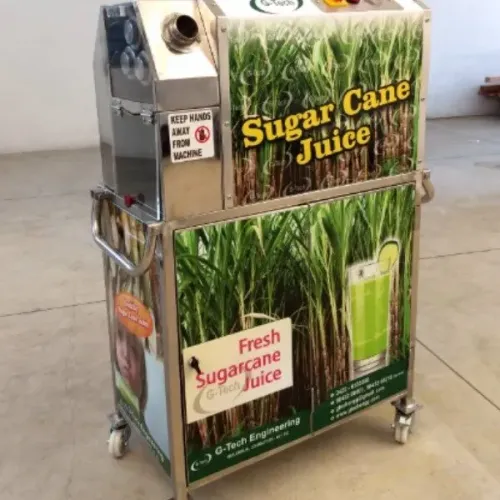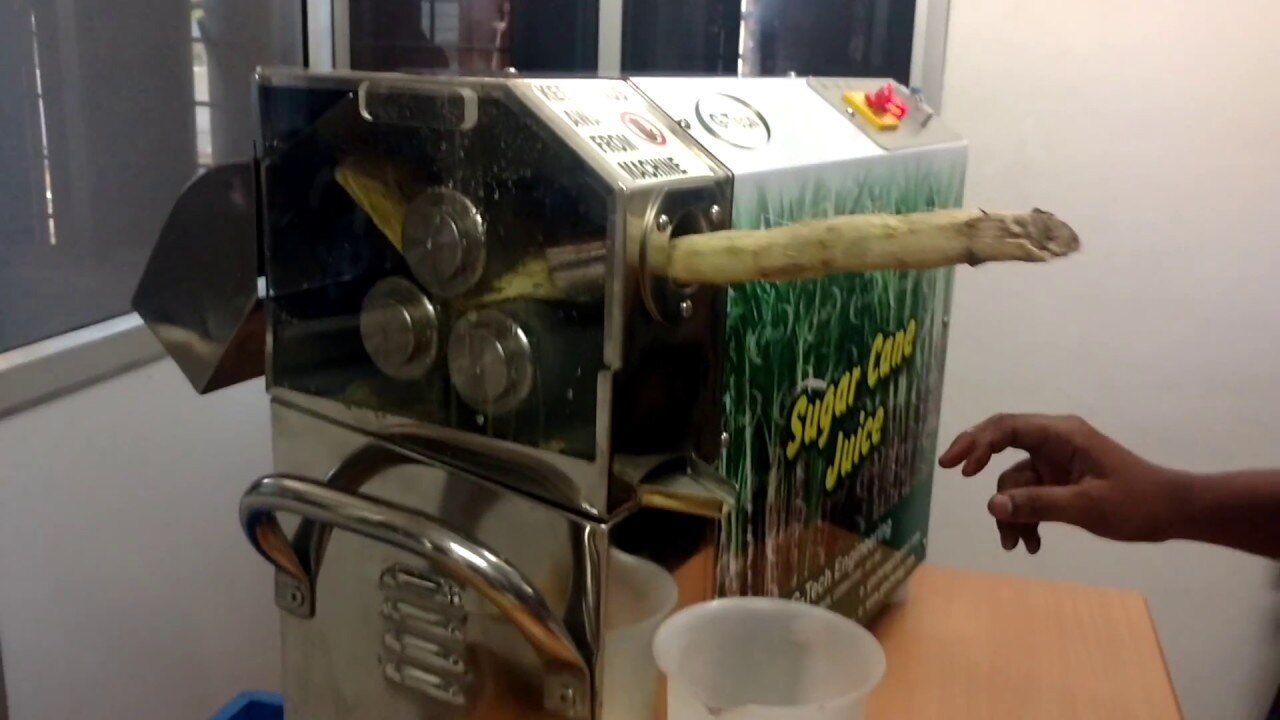
The purchase makes financial sense only when faster extraction produces enough additional saleable cups to cover equipment, labour, power, cleaning and downtime. By the end, you will be able to calculate your break-even volume, test whether your site can support the machine and compare ownership with manual pressing, ready-made juice and outsourcing.
Key takeaways
- Divide net machine cost by contribution margin per extra cup.
- Test output during your busiest 30-minute service window.
- Confirm cleaning, chilling, guarding and emergency-stop procedures before purchase.
- Demand capacity, warranty, spares, installation and downtime terms in writing.
How many extra cups must the machine sell to pay for itself?
Break-even cups equal the machine’s net cost divided by contribution margin per extra cup, not purchase price divided by retail price. Calculate daily contribution as: saleable cups × selling price, minus cane, sweetener, cups, ice and other per-cup costs; add labour saved, then subtract electricity, cleaning supplies, maintenance, financing, spoilage and expected downtime.
Use your own figures. If the machine costs 120,000 and produces 20 contribution per incremental cup, you need 6,000 extra cups over its paid period. Convert that result to litres using your actual cup size, then divide by realistic operating days—not every calendar day.
The useful measure for an electric sugarcane juice machine for snack vendors is saleable cups per labour-hour. Horsepower and a supplier’s maximum extraction claim do not show whether one worker can prepare, filter and serve more drinks during your rush.
| Option | Financial effect | Best comparison |
|---|---|---|
| Hand-crank press | Lower capital cost; labour limits peak sales | Use if current demand is fully served |
| Ready-made juice | No crushing labour; higher supply and freshness cost | Use when volume is low or irregular |
| Rental | Avoids ownership and maintenance | Use for short events |
| Outsourcing | Minimal equipment work; less control over margin | Use when preparation space or staff is limited |
| Electric machine | Adds capital and running costs; raises peak capacity | Use when queues lose sales or require another worker |
Test incremental margin during your predictable rush. If manual pressing already serves every customer, electricity and cleaning add cost without adding revenue; if queues leave customers unserved, calculate break-even cups and litres from your selling price, ingredient costs, labour rate and realistic operating days.
Will the machine keep up with a rush at your actual site?
A machine keeps up only when sustained, saleable output matches your rush and the site can supply its starting load. Do not compare these figures as if they mean the same thing:
| Measure | What it tells you | Why it can mislead |
|---|---|---|
| kg of cane per hour | Feeding capacity | Says nothing about juice recovery |
| litres of juice per hour | Extraction volume | Changes with cane variety, moisture and re-crushing |
| cups per hour | Serving capacity | Depends on cup size, straining and chilling |
Request a witnessed test with a known mass of your local cane. Record juice volume, residual bagasse moisture, recovery time between batches and operator count. Use the same cane diameter, maturity, feed rate, roller gap and re-crushing method; otherwise a supplier’s number is only a different experiment.
Test the preparation that your stall actually faces: trimming, crooked or oversized cane and the feed-throat dimensions. Three-roller geometry can improve the crushing path, but it adds pinch points and cleaning surfaces. No-load roller speed is not sustained output.
For an electric sugarcane machine for concession operators, verify site voltage, phase, rated current, plug type, starting load, circuit breaker, grounding, residual-current or GFCI protection and generator headroom. A matching wattage does not guarantee reliable starts.
Finally, check noise, weight, wheels, footprint, drainage and weather exposure. A mobile vendor must move the unit without touching or exposing food-contact parts; a high-output machine that cannot travel safely or fit the stall is not extra capacity.
What work remains after the motor starts?
An electric cane juicer for snack businesses removes hand-cranking, not the queue. You still sort and trim cane, wash it with potable water, cut it to a feedable length, stage pieces, feed the rollers, collect juice, handle wet bagasse, strain the juice, add ice or move juice to chilled storage, and serve.
A practical queue workflow is:
- Prepare cane before the rush and keep pieces in a clean, covered tray.
- Feed rollers while a second person handles cups, ice, filtration, payment and handover.
- Empty bagasse before the bin fills and pause to clear fibrous residue safely.
- Strain juice immediately, then serve it or transfer it to chilled storage.
One operator can still become the bottleneck. A growing tray of prepared cane, repeated clearing pauses, a full bagasse bin or customers waiting while juice is chilled shows that crushing is not the limiting step.
| Demand pattern | Main risk | Better plan |
|---|---|---|
| Continuous rush | Crusher outpaces serving, or preparation falls behind | One person feeds and monitors; another handles cups, ice, straining, payment and waste |
| Intermittent event demand | Faster crushing cannot recover setup and teardown time | Stage small batches and compare total cups per labour-hour |
Measure saleable cups per labour-hour, not the motor label. If one worker must do every task, count preparation, cleaning and payment time; a manual press, purchased juice or rental may win when demand arrives in short bursts.
A full tray is useful evidence: add staff or stage more cane before buying capacity you cannot serve.
Can you clean, chill and operate it safely between customers?
Cleaning can erase the productivity advantage of a commercial electric sugarcane juicer if pulp remains trapped between customers. Choose a machine that opens without tools, drains fully, and exposes every food-contact surface.
1. Stop the motor, switch off the supply, unplug the machine, and isolate power before reaching near rollers, strainers, belts, or chutes. Never hand-feed cane, push residue into moving rollers, or bypass roller guards and feed-opening protection.
2. Remove rollers, strainers, screens, and collection parts according to the manual. Wash cane residue, sugar, and wet bagasse away with potable water, then use detergent on the juice path, roller grooves, chute, drain, and waste area.
3. Rinse, apply food-contact sanitiser at the label concentration and contact time, then rinse only when the product label requires it. Keep raw cane, finished juice, clean utensils, and waste-handling tools separate.
4. Clear wet bagasse before it attracts insects or blocks drainage. Control pests, cover finished juice, and dry every removable part before reassembly; a strainer does not remove biofilm, insects, or metal fragments from worn components.
5. Hold juice at 41°F (5°C) or below where the FDA Food Code applies, using ice or refrigeration. Fresh cane juice is not shelf-stable, and browning control does not control pathogens.
Inspect for smooth corrosion-resistant surfaces, inaccessible crevices, removable screens, replacement-screen availability, intact cords, suitable enclosure ratings, and emergency stopping. Do not spray motors or controls unless the manufacturer permits it. Confirm local vending, electrical-listing, and sanitation requirements before opening.
What should you demand in the purchase and service quote?
Ask for a delivered quote that prices the commercial electric sugarcane juicer over its working life. A low checkout figure can hide wiring, downtime and replacement parts.
1. Itemise the machine, transport, installation, site wiring, tax and operator training. State warranty duration, exclusions, service response time and expected service intervals.
2. List prices and availability for spare rollers, bearings, belts, switches, capacitors and strainers. Confirm included overload protection and identify who pays for diagnostic visits.
3. State voltage, phase, rated current, plug or terminal arrangement, duty cycle, maximum cane dimensions, tested output, roller material and adjustment method. Ask for results from a witnessed test using your cane, not a no-load demonstration.
4. Provide cleaning instructions, food-contact-material information, electrical safety documentation and any recognized equipment certification required by your venue, landlord or local authority. Confirm grounding, enclosure protection, residual-current or GFCI requirements, and whether spraying the motor or controls is prohibited.
5. Require tool-free access to food-contact parts, drainability and replacement-screen details. Sugar-rich juice and wet bagasse trapped in grooves or chutes can turn a fast machine into a long sanitation job.
When comparing G Tech Engineering with alternatives, use the same cane test and ownership-cost worksheet rather than model labels or horsepower.
Buy an electric sugarcane juice machine for snack vendors when rush demand is predictable, power is adequate, staff can stage and clean it, and the design is serviceable; choose a manual press, purchased juice or rental when those conditions fail.
Related products
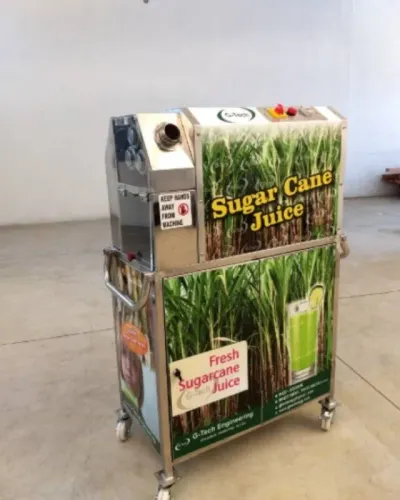
 | Juicer Machine Sugarcane Juicer Machine ( Bin Model -1000) Sugarcane Juicer Machine ( Model : Bin - 1000) It is Very Attractive, Compact and High Effective in Production.It has Inbuilt Dustbin Inside The... View product → |
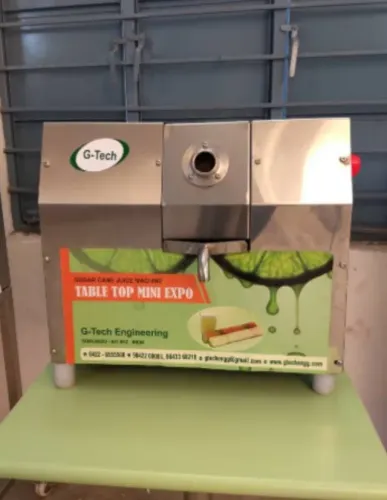
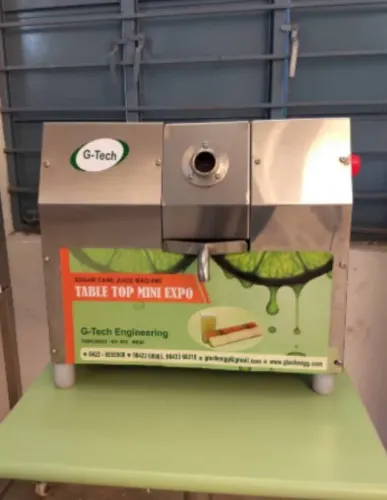
 | G-Tech cane juicer Table Top Mini It is a table top economical model, compact to use. View product → |
Frequently asked questions
How many extra cups must the machine sell to pay for itself?
Divide the machine’s net cost by the contribution margin per extra cup. Include cane, sweetener, cups, ice, electricity, cleaning, maintenance, financing, spoilage and downtime, then add labour saved.
Will an electric sugarcane machine keep up with a rush at my site?
Test the machine with your actual cane, cup size and service process during the busiest 30-minute period. Compare saleable cups per hour with your peak demand, not the empty-machine rating.
What work remains after the motor starts?
You still need to load and cut cane, monitor feeding, collect juice and bagasse, replace ice and cups, handle jams, serve customers and complete cleaning.
Can you clean, chill and operate it safely between customers?
Check access to rollers, juice channels, strainers and waste areas. Confirm guards, emergency-stop controls, electrical protection, food-contact materials, drainage and a practical cleaning and chilling routine.
What should you demand in the purchase and service quote?
Require the exact model, rated throughput, electrical load, included parts, installation, training, warranty duration, response time, spare-parts pricing, preventive maintenance and downtime coverage in writing.
Related products
 | G-Tech cane juicer Stand with bin model This machine is very attractive, compact and high effective in production. It has inbuilt dustbin inside the table of the machine. View product → |
 | G-Tech cane juicer Table Top ( Model : TT- 500 Mini ) Table Top 0.5 HP This Machine Is Design For Easy To Carry. In This Machine We Can Get Maximum 60 Litres of Juice/Hr. View product → |
Keywords