A seasonal sweet business must size khoya production around peak-day orders, milk solids, batch time and available utilities—not the motor rating or vessel label alone. By the end, you will be able to compare machine designs, calculate realistic shift output, plan operation and define the tests and food-safety records to request before buying.
Key takeaways
- Size the machine for your busiest confirmed order day, not average monthly demand.
- Compare batch capacity, heating method, scraper design and cleaning access.
- Validate output with a timed acceptance test using your own milk recipe.
- Require food-contact documentation, safety guards and a documented cleaning procedure.
When does a khoya machine make sense for a seasonal business?
Start with your busiest day, not your average month. A khoya making machine for seasonal demand makes sense when its validated daily output covers confirmed Diwali, Pongal, wedding or local festival orders without creating excessive idle capacity afterward.
- List each sweet, the khoya required per batch, and confirmed orders.
- Multiply recipe quantity by order count to find total finished khoya required.
- Add a measured allowance for scorching, transfer loss and rejected product; use your recent batches to set the percentage.
For a first estimate, milk containing 12–13% total solids produces about 17–19 kg of khoya at approximately 30% moisture. Thus, 100 kg of milk may yield 17–19 kg before losses, but milk fat, starting temperature, endpoint texture and handling change the result.
A machine sized only for average monthly demand will leave you short during festival weeks. One sized for the highest theoretical demand will sit idle and add cleaning and maintenance work after the season.
| Choice | Advantage | Risk |
|---|---|---|
| Smaller machine, several batches | Lower idle capacity and easier off-season use | More loading, cooling and cleaning time |
| Larger machine, peak-only operation | Higher peak-day output | Idle capital and maintenance after the season |
Ask for maximum milk input per batch and finished khoya output per batch. “100 kg capacity” is incomplete unless it states whether 100 kg means pan volume, milk charge or finished product. Choose the option that meets peak demand within your shift, not the largest vessel.
Which machine design and specifications should you compare?
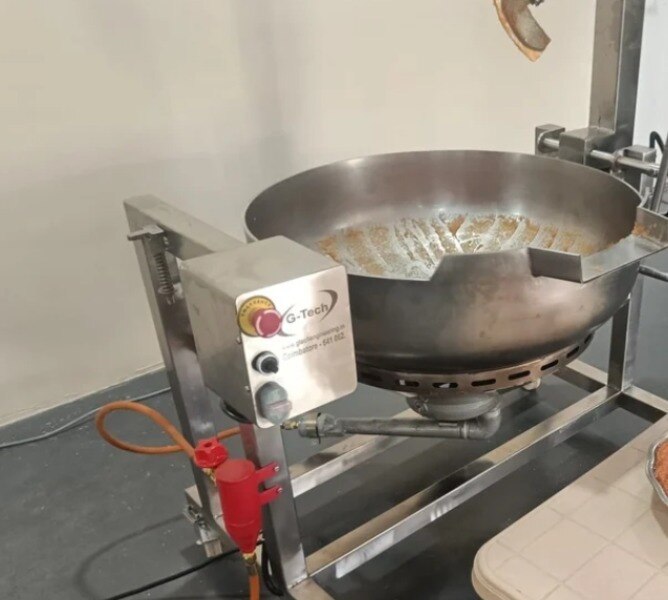
Compare a direct gas-fired pan with a steam-jacketed pan before comparing motor size or advertised capacity. The right khoya machine for sweet shops depends on scorching control, available utilities and cleaning time.
| Option | Main advantage | Cost or risk to compare |
|---|---|---|
| Direct gas-fired pan | Fewer supporting systems and faster installation | Burner placement, pan geometry and scraper coverage must prevent local scorching |
| Steam-jacketed pan | More even heating with flame kept away from the milk | Requires a boiler or steam generator, steam traps, pressure controls, condensate drainage and ventilation |
Write these details into the supplier quotation:
- Milk-contact grade, weld finish, dead-space control, drainability and gasket material; SS 304 is common, but steel grade alone does not prove hygienic cleanability.
- Milk charge per batch, finished khoya output, heating power or fuel consumption, agitator speed, scraper clearance, spring loading and shaft-seal design.
- Temperature control, electrical phase, connected load, overall dimensions, drain size, water requirement and cleaning access.
- Whether the scraper, shaft seal, discharge outlet and other product-contact parts can be removed without entering the vessel.
A commercial khoya machine in Coimbatore also has to fit the site: confirm LPG or natural-gas supply, floor drainage, water supply and exhaust space. Ask for a live trial using your milk and target batch size.
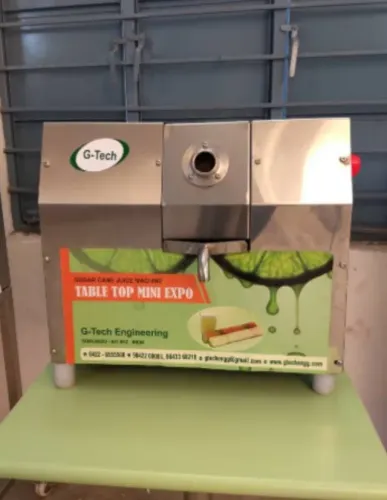
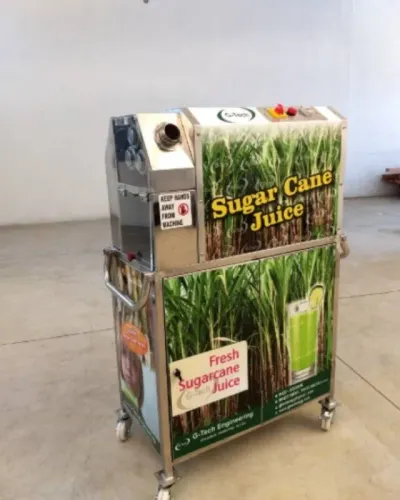
G Tech Engineering belongs on the shortlist only after it confirms a khoya system or fabrication route in writing, rather than assuming its catalogue equipment suits dairy production.
How many khoya batches can you complete in one shift?
An eight-hour shift supports two batches when each complete cycle takes four hours, not three based on cooking time alone. For a khoya making machine seasonal business in Coimbatore, time loading, preheating, evaporation, final concentration, discharge, cooling and washing.
| Planning case | Cycle calculation | Realistic shift output |
|---|---|---|
| Two validated batches | 4 hours × 2 | 2 batches |
| One advertised cooking estimate | 2.5 hours × 3 | Not achievable after cleaning and handling |
| Interrupted festival shift | 4 hours plus milk handling and delays | Confirm after a timed trial |
Record milk charge by weight, not litres; temperature and measuring practice alter volume. If 100 kg of milk yields 18 kg of khoya, two completed batches plan for about 36 kg before rejected or held product. Compare that figure with confirmed peak-day orders for Diwali, Pongal, weddings and local festivals.
Size the machine for the required moisture and texture, not maximum vessel fill. A low-moisture batch takes longer and raises scorching risk; a softer batch retains more water and changes sweet formulation. Ask the supplier to state both maximum milk input and finished khoya output per batch.
Include turndown in the decision. A pan that agitates a half-load properly is more useful outside the peak season than an oversized vessel that works only when full. Run your own milk through a timed trial and record batch start, finish, final weight, endpoint texture and cleaning time before accepting an output claim.
What operating method gives consistent khoya?
1. Inspect and clean the pan, scraper, agitator, discharge outlet and seals before loading. Weigh the milk and record its starting temperature; record fat or total-solids content when available. Load only the measured quantity and stay below the supplier’s working level.
2. Start agitation before applying strong heat so milk solids do not settle. Raise the heat gradually, keep the scraper touching the heated surface, and watch for uneven browning, vibration or a growing deposit on the bottom. Reduce heat as the mixture thickens; concentrated milk scorches quickly.
3. Define the endpoint before production. Use final weight, a moisture test, a recorded temperature profile or a validated texture check, and record the result for every batch. Do not rely on colour alone. Stop heating at the approved endpoint, then discharge promptly into a clean, shallow food-grade tray.
4. Cool the khoya under protected conditions and hold it within the temperature and time limits in your validated food-safety procedure before using it for peda, burfi, gulab jamun or other sweets. Mark each container with the batch identity and production time.
5. Clean before residue hardens. Remove the scraper and accessible parts, rinse off milk solids, wash with the approved detergent, rinse again, sanitise where required, and inspect the pan bottom for burnt protein or fat deposits. Never carry residue into the next batch.
What acceptance test and food-safety controls should you require?
Before production, confirm the food business’s FSSAI registration or licence route through FoSCoS. Seasonal operation for Diwali, Pongal or weddings does not remove that requirement. Separate raw-milk receiving, equipment cleaning and finished-khoya handling.
Require cleanable milk-contact surfaces, dry floors, covered cooling trays and pest protection. Write the cooling interval into the food-safety procedure. If milk burns onto the pan, demand scraper, heat-control or surface corrections; a longer wash is not an acceptable fix.
Record each acceptance batch:
- Milk quantity, starting temperature, fat or total-solids reading if available
- Heating method, energy or fuel consumed, batch start and finish times
- Final weight, moisture or defined texture endpoint, product temperature
- Discharge loss and complete cleaning time
Repeat the trial at the intended full load and at a smaller seasonal load. Compare results against the same target moisture and texture, not kilograms alone.
| Heating option | Confirm before installation | Failure to accept |
|---|---|---|
| Electric | Phase, connected load, shop supply, cable protection and exhaust | Supply cannot support the rated load |
| Gas | LPG or natural-gas capacity, ventilation, burner controls and exhaust | Flame or ventilation arrangement is unsafe |
| Steam | Boiler capacity, pressure controls, steam traps, condensate drainage and ventilation | Steam system cannot sustain the batch |
Request maintenance intervals, scraper replacement instructions, gasket specifications and local spare-part availability. Approve the machine only when it makes consistent khoya within the available shift, utilities, cooling interval and cleaning window.
Frequently asked questions
When does a khoya machine make sense for a seasonal business?
Choose one when its validated daily output covers confirmed Diwali, Pongal, wedding or local festival orders without leaving excessive idle capacity afterward.
Which khoya machine specifications should you compare?
Compare usable batch capacity, heating method, scraper and agitator design, temperature control, food-contact materials, discharge arrangement and cleaning access.
How many khoya batches can you complete in one shift?
Calculate batches from usable capacity, cooking time, loading and unloading time, cleaning time and the length of your actual shift; confirm the result with a timed trial.
What operating method gives consistent khoya?
Use a fixed milk quantity, record starting temperature and cooking time, maintain the specified agitation and heating settings, and check the finished moisture and texture against a reference batch.
What acceptance and food-safety controls should you require?
Require a witnessed output test, batch-time record, emergency-stop check, guards, smooth cleanable food-contact surfaces, material documentation and a written cleaning and sanitation procedure.
Keywords