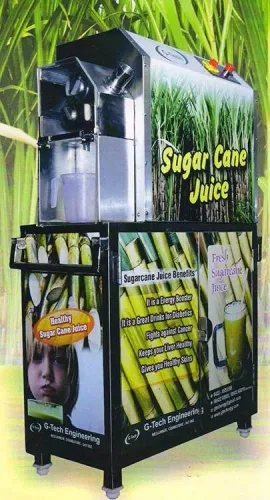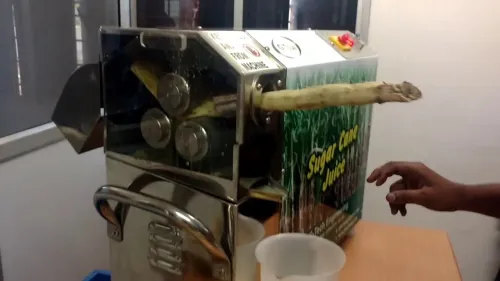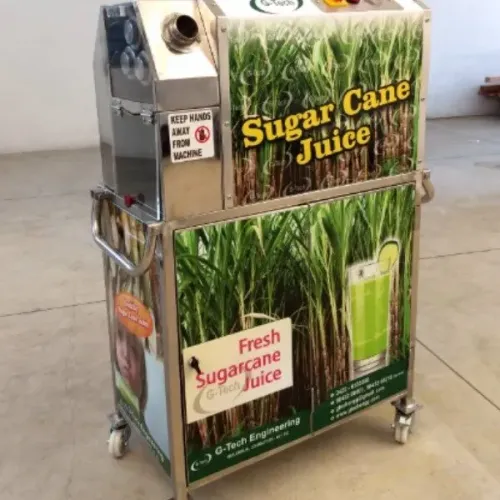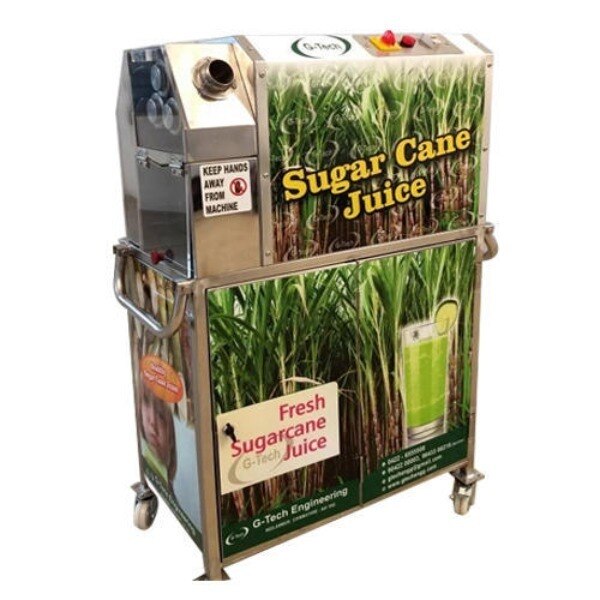
A catalogue labelled for sugarcane preparation does not prove that it peels cane: peeling, trimming and crushing are separate operations with different machine designs and output measures. By comparing the machine type, test evidence, hygiene and safety provisions, electrical requirements, service support and total ownership effort, you can identify a genuine peeler and quote it responsibly to customers in Coimbatore.
Key takeaways
- Check that the machine removes rind rather than only crushing cane.
- Request throughput in kilograms per hour, not motor power alone.
- Test peeling on the cane varieties and diameters you will sell.
- Compare cleaning access, spare parts and downtime before stocking a model.
How to tell a genuine sugarcane peeler from a juicer
A genuine sugarcane peeler removes the outer rind or skin before the cane reaches a serving or extraction stage. A juicer crushes or presses the stalk to release juice; its rollers do not prove that peeling has occurred.
Trimming the ends is preparation, not peeling, and a crusher cannot be compared with a peeler by motor power alone.
| Option | Operation | Compare when |
|---|---|---|
| Manual or bench-top peeler | Operator feeds each stalk against a blade or abrasive surface | Demand is modest and labour is available |
| Semi-automatic roller-and-blade peeler | Rollers grip and move cane past peeling elements | You need steadier output with operator loading |
| Abrasive peeler | Removes rind through a rotating abrasive surface | Cane sizes are consistent and surface finish is acceptable |
| Fully automatic continuous peeler | Feeds, peels and discharges stalks with limited handling | Throughput, labour reduction and continuous production matter |
| Integrated preparation system | Combines peeling, trimming or feeding with downstream equipment | You need a coordinated preparation line, not a standalone peeler |
Compare commercial peeler machine options by peeled-cane output, not the juicer’s extraction rate. Ask whether the quoted output is peeled stalks per hour, juice litres per hour, or both. For sugarcane peeler machine options in Coimbatore, require a written scope covering cane diameter, peeling depth, feed method, cleaning access, guarding, emergency stop and electrical supply.
Confirm that blades or abrasive elements, rollers, bearings and seals are available locally; a “peeler” with no defined peeling mechanism or peeled-cane output is only a juicer or an adapted machine.
The specification checklist that reveals usable capacity
Obtain a written specification before comparing commercial peeler machine options. It must separate peeling capacity from juice-extraction capacity: peeling removes outer rind, while crushing or pressing produces juice. Ask for usable output with the cane sizes you sell, not only the motor’s rated horsepower.
- Cane diameter range, maximum stalk length, acceptable bend, and node size
- Peeling depth or rind-removal setting, plus the allowed peeled-cane loss
- Feed method: hand-fed, hopper-fed, roller-fed, or continuous
- Rated peeled output per hour and the test conditions behind that figure
- Motor power, rated voltage, phase, frequency, full-load current, starting current, overload protection, and earthing arrangement
- Operator tasks, batch loading time, rework handling, and the number of people required
- Guarding, interlock, emergency stop, and access for clearing a jam
- Cleaning access, drain points, food-contact materials, and removable parts
- Blade or abrasive-element life, roller and bearing replacement, seals, belts or chains, and local service response
| Machine type | Handling and mechanism | Capacity question to ask |
|---|---|---|
| Manual or bench-top | Hand-fed; low mechanical complexity | How many stalks can one operator peel without excessive fatigue? |
| Semi-automatic roller-and-blade | Motor-driven rollers guide each stalk past blades | What happens to bent cane, large nodes, and incorrectly fed stalks? |
| Fully automatic continuous | Hopper or conveyor feed with continuous peeling | Does the stated hourly output include jams, trimming, cleaning, and rework? |
| Integrated preparation system | Peeling combined with trimming or downstream preparation | Which output is peeled cane, and which figure belongs to another operation? |
Test peeling performance on representative Coimbatore cane
Do not accept a demonstration with straight, uniform stalks. Ask the sugarcane peeler machine supplier to run representative Coimbatore cane, including bent stalks, mixed diameters, hard outer rind and large nodes, because ideal cane hides jams and rework.
1. Weigh and label the test batch, then record actual saleable output over a timed run. Report kilograms of peeled cane per hour, not the feed rate, and note every stoppage, jam and manual reset.
2. Inspect a sample from the beginning, middle and end of the run. Check whether the machine removes the specified outer rind without gouging usable cane, leaving unpeeled bands, crushing the stalk or requiring hand trimming.
3. Weigh the incoming cane, peeled output and peel waste separately. Calculate cane loss as the difference after allowing for trimmed ends, then repeat the calculation with bent and oversized stalks rather than relying on one average batch.
4. Count people at the feed, discharge, cleaning and waste points, and record how often they touch or reposition cane. Run the machine continuously for at least 30 minutes to expose fatigue, heat buildup and labour that a short demonstration conceals.
Stop the trial if a guard is open, a belt or blade is reachable, or the emergency stop fails to halt moving parts promptly. Check restart behaviour after a jam, access for cleaning, electrical protection and whether operators can clear blockages without placing hands near rollers or cutting elements.
Get the results, cane conditions and agreed output definition in writing.
Compare hygiene, maintenance and total ownership effort
Purchase price is a poor measure of ownership effort. Compare cleaning time, water use, cane loss, blade or abrasive replacement, jam recovery and service travel before choosing a sugarcane peeler machine supplier.
| Check | Evidence to demand | Reject or clarify when |
|---|---|---|
| Cleaning and food contact | Written cleaning procedure, removable contact parts, drain access, and material names such as stainless steel 304 | Surfaces trap rind, fasteners are inaccessible, or contact materials are unnamed |
| Wear parts | Prices and stock status for blades or abrasive elements, rollers, bearings, seals, belts or chains, overload devices and food-contact fasteners | No part numbers, consumable life, or blade re-sharpening interval is supplied |
| Electrical fit | Rated voltage, phase, frequency, full-load and starting current, overload protection, earthing arrangement, and single-phase or three-phase compatibility | The quote gives only motor horsepower |
| Service | Warranty period, exclusions, commissioning responsibility, response time, and technician location | “Service available” appears without a named process or response commitment |
Ask for a recorded cleaning demonstration and a parts schedule with expected consumable life. A machine that needs daily dismantling can erase its labour advantage; a poorly sealed bearing can contaminate the food-contact area and stop production.
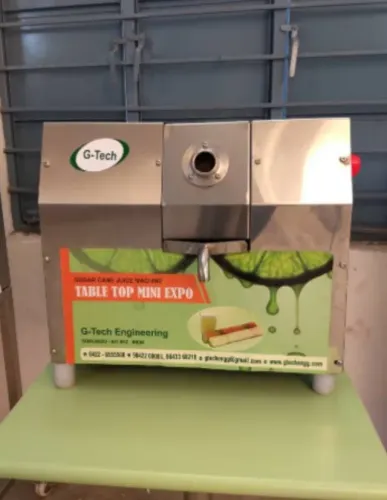
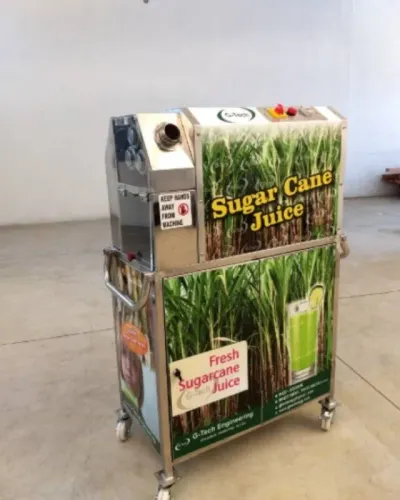
A sugarcane peeler machine dealer in Coimbatore should state whether the trial and warranty cover bent cane and large nodes. Ask G Tech Engineering to identify in writing whether its quotation covers a dedicated peeler or only a juicer, then record that distinction in the purchase order.
Specify cane dimensions, peeled output, electrical installation, training and acceptance test.
When a dedicated peeler earns its place in a dealer’s range
Customers selling peeled cane for direct consumption, retail packs or a second preparation step need a separate peeler. A juice shop crushing whole stalks immediately usually gets better value from a juicer-only setup; a peeler adds feeding, cleaning, blade wear and another failure point without increasing extraction.
| Customer type | Better range choice | Reason |
|---|---|---|
| Retailer selling peeled sticks | Dedicated peeler | Separates rind removal from juicing |
| Juice shop crushing whole cane | Juicer only | Avoids an unnecessary handling stage |
| Caterer preparing peeled cane and juice | Peeler plus juicer | Supports two distinct outputs |
| Small vendor with irregular demand | Manual or bench-top peeler | Limits capital and cleaning time |
Treat Sugarcane peeler machine options in Coimbatore as a sourcing question, not a horsepower comparison. A Sugarcane peeler machine dealer in Coimbatore should prove performance with bent stalks, large nodes and the customer’s cane diameter; uniform demonstration stalks hide jams, rework and labour demand.
At handover, disclose the machine’s operating boundary in writing:
- Cane diameter, length, peeling depth and rated peeled output per hour
- Whether output means peeled cane, trimmed cane or processed feedstock
- Rated voltage, phase, frequency, full-load current, earthing and overload protection
- Guarding, emergency-stop operation and the cleaning procedure
- Blade or abrasive life, spare rollers, bearings, seals, belts and fasteners
- Warranty exclusions, commissioning responsibility and local service response time
Do not describe a peeler as an extractor, or combine their capacities in one quotation.
Frequently asked questions
How can you tell a genuine sugarcane peeler from a juicer?
A genuine peeler removes the outer rind or skin before serving or extraction. A juicer uses rollers or a press to crush the stalk and release juice; crushing does not prove that peeling has occurred.
Which specifications reveal a machine’s usable capacity?
Ask for rated throughput in kilograms per hour, acceptable cane diameter and length, feed method, motor rating, operating speed and the expected yield or reject rate. Capacity figures are useful only when they match the cane used by your customers.
How should you test peeling performance in Coimbatore?
Run representative local cane through the machine, including different diameters, lengths and surface conditions. Check skin removal, broken stalks, unpeeled patches, wastage, feed jams and output over a sustained test.
What hygiene and maintenance points should equipment dealers compare?
Inspect whether food-contact parts can be removed and washed, whether residue collects around shafts and guards, and whether the frame resists corrosion. Also compare blade or roller replacement, lubrication points, cleaning time, spare-part availability and service access.
When does a dedicated sugarcane peeler earn a place in a dealer’s range?
Stock one when customers need peeled cane for direct serving or a downstream preparation process and a juicer cannot provide that finish. It is a weaker choice when buyers only need juice extraction or lack the labour and cleaning routine required for peeling equipment.
Keywords