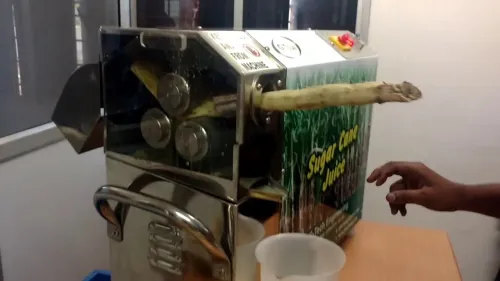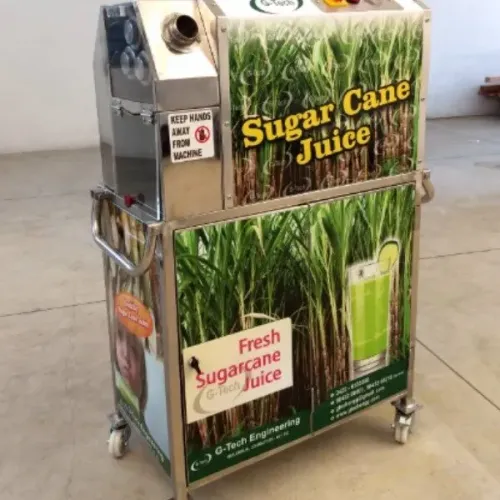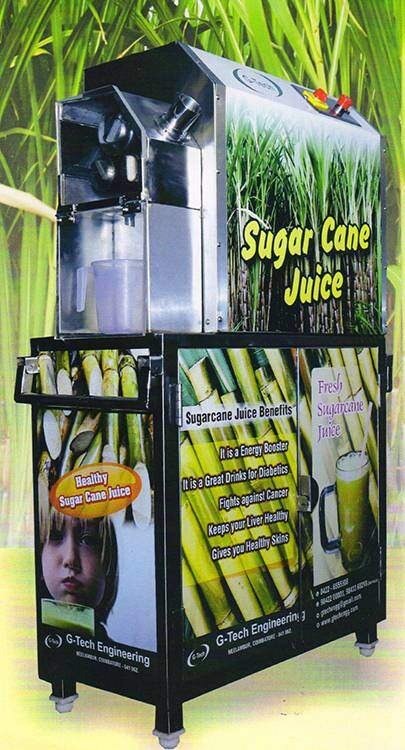
A quoted machine may include only the powered press, while trays, filters, electrical controls, tools and spare wear parts appear separately or are left unspecified. By checking the physical contents, installation requirements, operating specifications and service documents, you can tell whether the package is ready for commercial use or needs additional equipment.
Key takeaways
- Match every supplied item to the quotation before accepting delivery.
- Measure the machine footprint plus cane-feeding, cleaning and operator space.
- Confirm roller type, feed opening, motor rating and stated crushing capacity.
- Get installation, cleaning, warranty and optional-accessory terms in writing.
Check the physical contents against the quotation
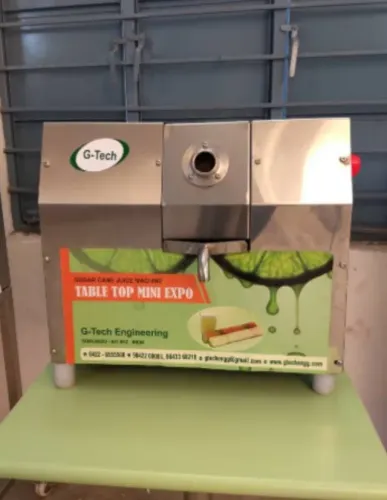
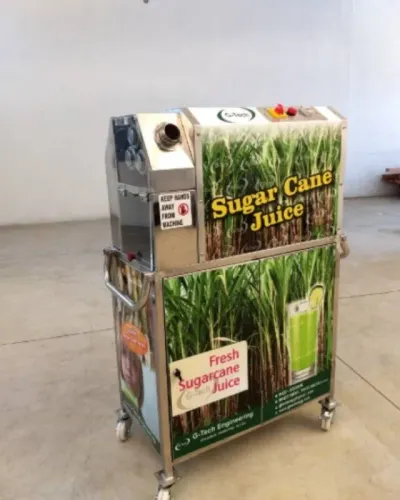
A standard table top sugarcane juice machine package should include the powered machine body, motor or geared motor, crushing rollers, cane-feed opening, juice tray or compartment, first-stage filter, electrical cable, switches, and fixing fasteners. Confirm every item against the quotation; photographs often show accessories that are sold separately.
Before signing for delivery, check these commercial sugarcane juice machine features:
- Roller guards and a covered belt or chain drive
- Emergency stop or accessible stop switch
- Overload protection and a reverse or jam-clearing function
- Non-slip feet or locking casters
- Removable screen, juice tray, guards, and roller scrapers
- Supplied tools, spare fasteners, filter elements, and covers
| Item | Standard expectation | Confirm separately |
|---|---|---|
| Machine body and drive | Frame, motor or geared motor, rollers, feed opening, and controls | Motor rating, gearbox type, duty rating, and shaft output |
| Juice path | Tray or compartment and first-stage screen or strainer | Extra filters, collection containers, and replacement screens |
| Electrical items | Cable, switches, and fitted control panel | Plug type, cable length, phase, and overload protector |
| Cleaning access | Removable tray, screen, guards, and roller scrapers | Special tools or fixed parts that cannot be removed |
| Documents and support | Operating and cleaning instructions | Warranty, commissioning, spare-parts list, and operator training |
Ask for the permitted cane size and feed length in writing. A narrow throat can require pre-cut, leaf-free cane even when the photograph shows whole stalks.
Confirm the footprint, working space and electrical connection
A 600 mm-wide counter does not guarantee a safe fit. Use the manufacturer’s drawing and table top sugarcane machine details to check the complete operating envelope, not just the stainless-steel body.
- Overall length, width and height, including the motor, switch box and feed throat
- Net machine weight and the counter’s permitted load
- Clearance above and beside the feed opening
- Space needed to remove rollers, screens, scrapers and the juice tray
- Clearance behind the unit for the cable and ventilation
- Whether vibration requires anchoring or a dedicated stand
Keep the feed opening at a comfortable working height, with room to place prepared cane and remove bagasse without reaching across moving rollers. A narrow counter can technically hold the machine yet leave no safe space for feeding or cleaning.
Request these sugarcane juice machine specifications before arranging power:
- Rated voltage, frequency and phase
- Running current and motor input power
- Gearbox type and duty rating
- Cable length and plug type
- Overload protection and emergency-stop provision
- Required circuit rating and earthing arrangement
Match the nameplate to your supply; do not force an incompatible plug into an adapter or share an undersized extension lead.
If the machine needs a single-phase or three-phase circuit that your premises does not have, get the electrical work completed before delivery and confirm that the quoted price includes no unlisted stand, anchoring kit or power accessories.
Read the roller, feed and capacity specifications correctly
The number of rollers and the stated cane-processing rate determine how the machine behaves during service. Three-roller presses pass cane through successive crushing points, while two-roller and multi-pass designs change extraction, feeding effort, cleaning access and drive load.
| Design | Pressing and feeding effect | What to verify |
|---|---|---|
| Two-roller | Simpler path, but cane may need another pass for higher extraction | Roller gap, permitted cane diameter and reverse function |
| Three-roller | Successive crushing points support steady commercial feeding | Roller material, adjustment method and cleaning access |
| Multi-pass | Repeated crushing can improve extraction but extends handling time | Number of passes, operator steps and stated continuous rate |
Treat the feed opening as a hard limit, not a photo-based estimate. Confirm the maximum cane diameter and length, then remove leaves, hard knots, stones and foreign material before feeding. A whole-stalk machine is not equivalent to a tabletop unit with a narrow throat.
Use kilograms per hour or stalks per hour as the useful capacity figure; motor horsepower alone cannot predict output. Ask whether the quoted rate is peak or continuous, and whether it assumes a particular cane diameter, moisture level, fibre content, roller setting and feeding speed.
- Check these commercial sugarcane juice machine features before comparing sugarcane juice machine specifications:
- Guarded rollers and a covered belt or chain drive
- Overload protection, an accessible stop control and reverse or jam-clearing
- Juice-tray volume, outlet height, splash control and drainability
Know what installation, operation and cleaning require
Place the machine on a level, rigid counter with all non-slip feet bearing evenly. Leave enough clearance to remove the juice tray, screen, guards and rollers without moving the unit. Connect the rated voltage, frequency, phase and plug specified on the nameplate; do not use an extension lead unless the manual permits it.
Include commissioning, operator training, cleaning instructions, a spare-parts list and warranty terms in the purchase order.
Use this daily sequence:
- Inspect the cable, plug, guards, rollers, scrapers, tray and screen before switching on. Confirm that removable parts are fitted and the emergency stop or stop switch works.
- Prepare cane to the stated feed length. Remove leaves, hard knots, stones and other foreign material; never push oversized stalks into a narrow throat.
- Start the machine empty, allow the rollers to reach operating speed, then feed cane steadily through the opening. Keep hands, clothing and tools away from guarded rollers.
- Stop the feed before the collection tray overflows. Use the reverse or jam-clearing function only as the manual directs; stop and isolate power before reaching into the feed path.
- Switch off after service, wait for all moving parts to stop, and unplug the machine before dismantling any component.
Cleaning is part of the table top sugarcane juice machine details, not an optional finish. Remove the tray, screen, scrapers and accessible juice-path parts, wash and sanitise them with approved food-contact products, then rinse and dry them before reassembly. Check that bagasse has not collected behind fixed guards or around bearings.
These are practical commercial sugarcane juice machine features to verify before purchase.
Separate included equipment from options and service deliverables
Treat the quotation—not the product photograph—as the boundary of the table top sugarcane machine contents. The powered press, rollers, motor, cane opening, juice tray or compartment, cable, switches, guards, fasteners, first-stage screen and cleaning tools belong on the line-item list. Ask what arrives in the crate.
| Item | Included only if written | Order or verify separately |
|---|---|---|
| Press and juice path | Rollers, motor, feed opening, tray, screen and outlet | Tray volume, outlet height, drainability, splash guard and food-grade collection container |
| Safety | Roller guard, covered drive, stop control and non-slip feet | Emergency stop, overload protection, locking casters and reverse or jam-clearing function |
| Food-contact parts | Tray, screen and removable juice-path components | Food-contact material declaration, weld finish, removable scrapers and tool-free access for cleaning |
| Service deliverables | Operating and cleaning instructions | Warranty terms, commissioning, operator training and spare-parts list |
| Production add-ons | Only items named in the quotation | Stand, cane-preparation table, chiller, cup or bottle filler, pump, secondary filter and wastewater connection |
Use the sugarcane juice machine specifications to check that safety devices are fitted, not merely advertised. The table top sugarcane juice machine details should also identify cable length, plug, filters and supplied tools.
If you are comparing a G Tech Engineering quotation, require every promised accessory and document to appear as a numbered line item before payment.
Related products
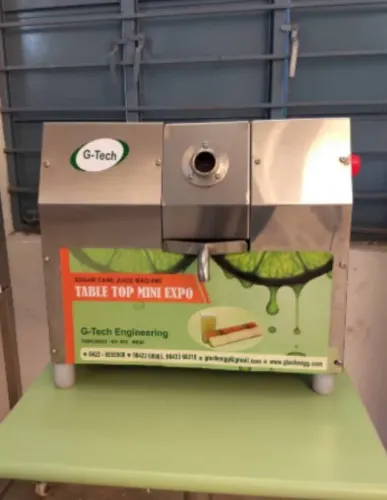
 | G-Tech cane juicer Table Top Mini It is a table top economical model, compact to use. View product → |
 | G-Tech cane juicer Table Top ( Model : TT- 500 Mini ) Table Top 0.5 HP This Machine Is Design For Easy To Carry. In This Machine We Can Get Maximum 60 Litres of Juice/Hr. View product → |
Frequently asked questions
What should come with a tabletop sugarcane juice machine?
Check for the machine body, motor or geared motor, crushing rollers, cane-feed opening, juice tray or compartment, first-stage filter, electrical cable, switches and fixing fasteners. Match each item to the quotation because displayed accessories may be optional.
What space and electrical details should you confirm?
Measure the machine footprint and reserve working space for feeding cane, collecting juice, removing pulp and cleaning. Confirm the voltage, phase, frequency, plug or cable arrangement, motor rating and earthing requirements before installation.
Which sugarcane juice machine specifications need careful comparison?
Compare roller material and arrangement, feed-opening size, stated crushing capacity, motor or geared-motor rating, juice filtration arrangement and safety controls. Ask the supplier to define capacity by cane size, operating time or other stated test conditions.
Which items are often separate from the machine package?
Ask for a written list of optional accessories and service deliverables. These can include extra filters, stands, covers, spare rollers, installation, operator training, transport, commissioning and scheduled maintenance.
Keywords