A commercial peeler machine removes skins, husks or loose outer layers from produce before cutting, cooking, drying or packing, but the correct equipment depends on the crop and the finish required. By the end, you will know which Coimbatore businesses use peelers, how the process fits into a production line, and which figures to measure before choosing one.
Key takeaways
- Peeler machines remove skins or loose outer layers before cutting, cooking or packing.
- Match abrasive, brush, steam or knife peeling to the crop and required finish.
- Measure kilograms per hour, peeling loss, unpeeled pieces and cleaning time.
- Buy when labour savings, consistent output and reduced product loss cover ownership costs.
What does a peeler machine do, and which Coimbatore businesses use one?
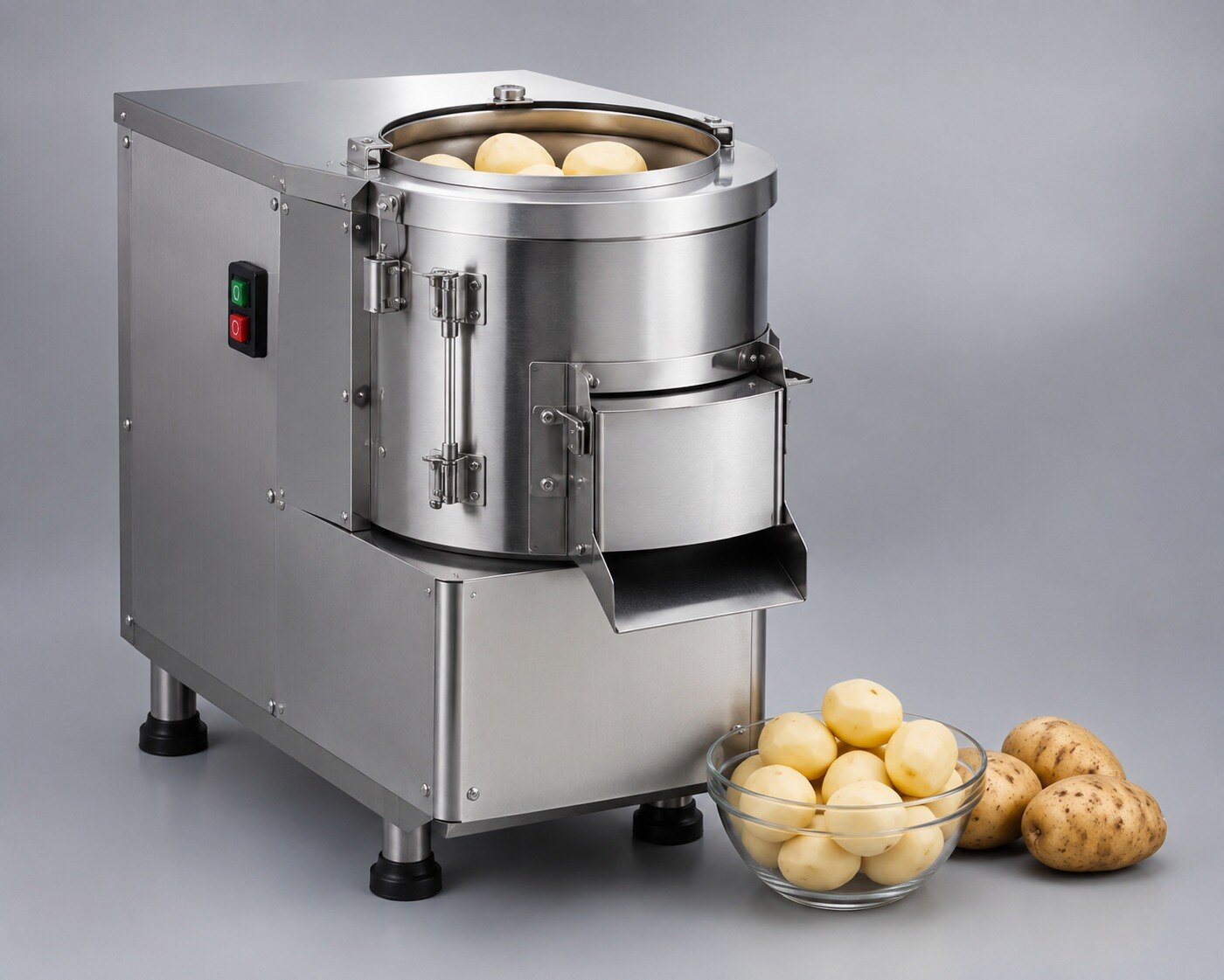
A peeler machine removes skin, rind or loose outer layers from produce before slicing, cooking, frying or packing. It does not automatically wash, trim, cut or inspect the crop; those are separate operations.
The practical answer to what is a peeler machine used for businesses in coimbatore is repetitive preparation of potatoes, carrots, cassava, ginger, garlic, onions and selected root vegetables. The machine must match the crop’s shape, skin thickness and required finish.
Commercial users include:
- Hotels, restaurants and institutional kitchens preparing large batches of vegetables.
- Caterers replacing slow, inconsistent hand peeling.
- Snack manufacturers processing potatoes or cassava for chips and other fried products.
- Vegetable processors and ready-to-cook suppliers preparing peeled produce for retail or food service.
- Wholesale produce businesses supplying cleaned, peeled ingredients.
| Type | Main action | Suitable use |
|---|---|---|
| Abrasive drum peeler | Rubs produce against an abrasive lining | Potatoes, cassava and firm root vegetables |
| Abrasive-belt peeler | Moves produce across a continuous abrasive surface | Higher-volume, more uniform root-crop processing |
| Knife peeler | Cuts away a controlled layer | Crops needing a cleaner, defined peel |
| Brush peeler | Scrubs loose skin and surface debris | Certain onions, garlic and delicate produce |
| Dedicated garlic or onion system | Removes wrapper or skin, sometimes with air separation | Specify whether you need outer-skin removal, clove-skin removal or slicing preparation |
Do not confuse a vegetable peeler with a sugarcane crusher. Sugarcane businesses usually inspect, wash or wipe, trim and cut cane; removing the entire rind adds labour and wet waste.
Which crops and peeler types are suitable for commercial work?
Match the machine to the crop, not just the required capacity. Commercial peeler machine applications usually fall into abrasive peeling, knife peeling, dry-skin removal or brushing; each removes a different layer and produces a different amount of waste.
| Crop | Suitable peeler type | What to specify |
|---|---|---|
| Potatoes | Abrasive drum or abrasive-belt peeler | Check skin loss, deep eyes, bruises, sprouts and hand-trimming needs |
| Carrots and cassava | Abrasive drum or dedicated root-crop peeler | Test firmness, diameter range and whether ends need manual trimming |
| Ginger | Controlled abrasive or brush peeler | Irregular rhizomes need inspection after peeling; excessive abrasion reduces usable yield |
| Garlic | Dry-skin remover, air separator or dedicated garlic peeler | State whether you want loose wrapper removal or edible clove-skin removal |
| Onions | Dry-skin remover or abrasive peeler | Define outer wrapper removal separately from complete preparation for slicing |
| Uniform firm produce | Knife peeler | Use it when a controlled peel depth matters more than handling irregular shapes |
Potato peelers are not universal vegetable peelers. A drum that handles potatoes efficiently can scar carrots, waste ginger or leave cassava patches behind. Steam or lye peeling belongs to larger industrial lines, where chemical handling, rinsing and wastewater controls justify the installation.
Keep manual inspection in the plan: machines do not reliably remove potato eyes, damaged onion layers or deep ginger crevices. Sugarcane usually needs washing, trimming and cutting before crushing, not full rind removal; specify a cane cutter or juicer instead of adapting a vegetable peeler.
Ask for local-crop trials and confirm replacement abrasive linings, brushes, blades, seals, bearings and motor support before choosing.
Where does peeling fit in the food-processing workflow?
Peeling belongs after receiving and washing, not at the start of the line. A practical workflow separates dirty raw produce from cleaned product, removes soil before abrasive contact, and leaves inspection and manual trimming after peeling rather than expecting the machine to correct every defect.
- Receive and inspect: reject rotten, mouldy or badly damaged produce, then remove stones, loose soil and foreign material.
- Wash or destone: use potable water and a washer or destoner suited to the crop. Soil and stones quickly wear abrasive surfaces and can damage the drive.
- Peel: feed the correct crop at the specified load and water flow; overloading leaves patches, while excessive abrasion removes usable flesh.
- Inspect and trim: remove remaining eyes, stalks, bruises and unpeeled patches by hand.
- Sanitise and move: clean and sanitise product-contact parts, drain the machine, then transfer produce in covered, food-grade containers to cutting or cooking.
A food processing peeler machine in Coimbatore should allow operators to reach, scrub and inspect the chamber, abrasive lining, brushes, seals and drains. FSSAI hygiene expectations include potable water, clean equipment and protection from cross-contamination. Measure litres of water per tonne, screen skins and soil from wastewater, and confirm drainage capacity before installation.
For sugarcane juice, inspect, wash or wipe, trim and cut the cane; do not treat a vegetable peeler as a substitute for a sugarcane crusher.
When does a peeler machine make financial and operational sense?
A few kilograms per day rarely justify a machine: hand peeling has no installation or maintenance cost, and a careful worker can protect yield on irregular produce. The calculation changes when hotels, caterers, snack manufacturers or institutional kitchens repeat the same peeling task across several batches. These are the main peeler machine uses for businesses.
| Option | Labour | Yield, water and maintenance | Capacity fit |
|---|---|---|---|
| Hand peeling | Highest labour and variable speed | Low water and no machine maintenance; skilled workers can minimise trimming loss | Small volumes or irregular crops |
| Semi-automatic machine | Reduces repetitive work, but loading, inspection and trimming remain manual | Moderate peeling loss, water use and cleaning; simpler service needs | Growing kitchens with batch production |
| Fully commercial peeler | Lowest labour per kilogram when correctly sized | Check usable yield, litres of water per tonne, wastewater screening, abrasive wear and drain capacity | Continuous or high-volume production |
| Pre-peeled produce | Removes peeling labour and equipment work | Higher purchase cost; inspect yield, shelf life, packaging waste and supplier reliability | Capacity is constrained by supplier deliveries, not your peeling room |
Choose the machine only when labour savings exceed water, electricity, wear parts, cleaning time and service costs. A wet abrasive unit becomes a poor investment if the site lacks drainage or solids disposal.
Specify the operation before comparing quotations. Garlic and onion equipment may remove loose wrappers, edible clove skin or material before slicing; these produce different yields. Sugarcane preparation usually needs inspection, washing, trimming and cutting rather than rind removal.
Fresh-cut plants must also clean product-contact surfaces, provide potable water and prevent food traps under FSSAI hygiene controls.
What should you measure during a peeler-machine demonstration?
Take the same 25–50 kg batch of your own produce to the demonstration, not a supplier’s prepared sample. Record the incoming weight, crop variety, size range and condition before testing; a machine that performs well on uniform potatoes can bruise irregular cassava or break garlic cloves.
- Weigh accepted peeled product after inspection. Calculate usable yield as accepted weight ÷ cleaned incoming weight × 100.
- Collect skins, peel fragments and flesh lost with them. Report peeling loss as a percentage, then inspect the product for unpeeled patches, bruising, broken cloves and manual rework.
- Time the complete cycle, including loading, peeling, unloading and cleaning. Convert the result to kilograms per hour at your chosen quality standard, not at the machine’s maximum setting.
- Record operator minutes per batch. Note whether one person can load, monitor and discharge the machine without constant scraping or sorting.
- Ask the supplier to identify abrasive linings, brushes, blades, seals, bearings and motors as replaceable parts. Confirm stock location, service response time and the adjustment that restores performance when wear increases flesh loss.
- Check electrical load, footprint, water flow, drainage, wastewater solids screening and cleaning access. A wet abrasive peeler can overwhelm a small drain with soil and skins.
For garlic or onions, specify whether you need loose-wrapper removal, edible-skin removal or air separation; these produce different yields and breakage. Ask G Tech Engineering, or any supplier, to test the exact local variety and provide the measured batch sheet before you compare quotations.
Frequently asked questions
What is a peeler machine used for in Coimbatore businesses?
Businesses use peeler machines to remove skin, rind or loose outer layers from produce before slicing, cooking, frying or packing. Common users include vegetable processors, snack manufacturers, hotels, caterers and food-packing units.
Which crops can a commercial peeler machine process?
The suitable crop depends on the machine design. Potato, carrot, beetroot, cassava and other firm root vegetables suit abrasive or brush systems, while softer or irregular produce may require a different peeling method.
Does a peeler machine wash, cut or inspect produce?
No. Peeling is a separate operation. Washing, trimming, cutting, grading and visual inspection require separate equipment or manual steps unless a complete processing line combines them.
What should you measure during a peeler-machine demonstration?
Record throughput in kilograms per hour, peeling loss, unpeeled pieces, breakage, batch consistency, water use, power demand, noise, cleaning time and changeover time using your own crop.
Keywords