Hot afternoons can increase sugarcane juice sales in Coimbatore, but rain, cloud cover and weak pedestrian traffic can reverse the effect within hours. Use weather patterns, customer counts, cup size and real machine throughput to decide how much capacity you need and whether buying equipment makes more sense than renting or outsourcing.
Key takeaways
- Use peak-hour footfall, not annual temperature, to size equipment.
- Multiply customers per hour by cups per customer for demand.
- Reduce rated capacity for loading, cleaning, pauses and slow service.
- Check power supply, drainage, workspace and rain cover before installation.
How Coimbatore Weather Changes Sugarcane Juice Demand
Hot, dry afternoons increase walk-in demand for fresh sugarcane juice in Coimbatore, while rain, strong wind and weak pedestrian movement reduce it. Annual average temperature is a poor sizing basis for a sugarcane juicer machine in coimbatore because sales respond to conditions at selling time, not a yearly average.
- Hot, bright weather: Expect more outdoor footfall, larger cups and a stronger afternoon peak near markets, bus stops, offices and busy roads.
- Humid weather: Thirst can remain high, but customers may avoid slow queues; fast service and chilled, hygienically handled juice matter more.
- Cloudy weather: Demand often softens compared with bright heat, especially at roadside stalls without a strong destination location.
- Rain or strong wind: Pedestrian traffic and roadside purchases can drop sharply, even when temperatures stay high.
Coimbatore stays warm for much of the year, so plan for recurring hot-weather peaks rather than an April–May-only season. Rainfall occurs during both the southwest and northeast monsoon periods, creating intermittent demand dips that a machine must survive without daily peak sales.
Weather is only one driver. School holidays, office traffic, festivals, tourism, location and nearby competition can move sales in the opposite direction. During warm operating conditions, protect juice from dust and insects, use potable water, remove bagasse quickly and clean the juice path frequently; the machine does not make the beverage safe by itself.
Turn Footfall and Cup Size into a Peak-Hour Forecast
Litres needed in a peak hour equal expected peak-hour customers multiplied by average cup size in litres, plus an operating buffer. If 90 customers buy 250 ml each, demand is 22.5 litres; a 15% buffer raises the preparation target to 25.9 litres.
Calculate this for each weather scenario instead of relying on Coimbatore’s annual average temperature.
- Count pedestrians near the proposed stall during the hottest selling hour, then estimate the share who actually stop. Keep bus-terminal, market, college and factory traffic separate because location-driven demand can remain strong during moderate weather.
- Measure average cup size from planned sales. A 250 ml cup and a 350 ml cup produce very different litre requirements at the same customer count.
- Apply a peak-hour share to the day’s forecast. If you expect 240 cups across eight hours and 30% arrive in the busiest hour, that hour contributes 72 cups.
- Record hot-and-dry and rainy-day results separately. Rain, strong wind, cloud cover and lower pedestrian movement can reduce conversion even while the temperature stays high.
For a sugarcane juicer machine for seasonal demand in Coimbatore, use observed counts from several hot afternoons and rain-affected periods. Multiply your peak-hour litres by the number of heavy-demand hours to plan cane purchasing, ice, cups and staff; do not treat every operating hour as equally busy.
Recheck the forecast during school holidays, festivals, tourist surges or nearby construction, since these drivers can outweigh weather.
Separate Machine Capacity from Saleable Throughput
A 60-litre-per-hour rating describes juice produced during a controlled, continuous run—not the volume you will sell during a busy shift. At 150 ml per cup, it equals 400 cups per hour on paper, before spillage, foam, discarded juice, refilling, customer payment, and short cleaning pauses.
| Measure | What it tells you | What to verify |
|---|---|---|
| Rated capacity | The manufacturer’s stated maximum output | Cane size, feed rate and test conditions |
| Tested throughput | Output using cane like yours | Litres produced during a timed trial |
| Saleable throughput | Juice reaching customers during service | Output after pauses, waste and handling time |
Ask the supplier to test the commercial juice machine with the cane diameter, cut length and feeding rhythm you expect. Thick or fibrous cane can slow feeding and increase re-passes; dry cane can reduce extraction, even when the motor continues running.
Measure the machine across a real peak-hour trial, not just one uninterrupted pass. Record start-up time, hopper loading, jam clearing, cup filling and cleaning.
If the machine produces 60 litres in a test but your staff can serve only 35 litres during an hour of repeated starts and stops, 35 litres is the capacity that matters for staffing and stock planning.
Also check continuous-duty operation, overload protection and transmission design. A machine that reaches its headline output only before overheating or tripping will create queues precisely when weather-driven demand is highest.
Choose Between Buying, Renting and Manual Pressing
Buy sugarcane juice business equipment when hot-weather sales recur across several months, your forecasted peak-hour volume exceeds what two workers can press and serve manually, and the machine will earn through more than one season. A single April–May spike does not justify ownership if the outlet has no use for the equipment afterward.
| Option | Best fit | Main trade-off |
|---|---|---|
| Buy a commercial machine | Fixed shop with recurring afternoon demand | Capital, maintenance and storage remain your responsibility |
| Rent a machine | Temporary stall, event or trial season | Availability, transport, deposit and unfamiliar equipment can restrict service |
| Manual pressing | Very low volume or uncertain demand | Slow output, higher labour effort and inconsistent service during a rush |
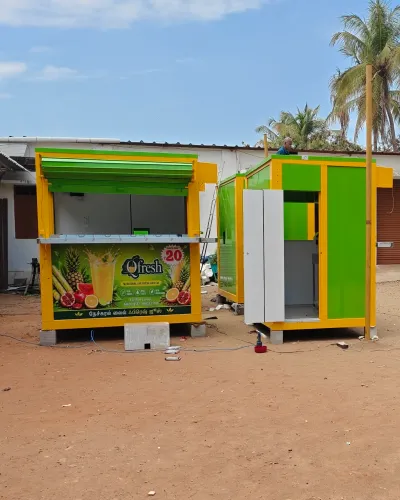
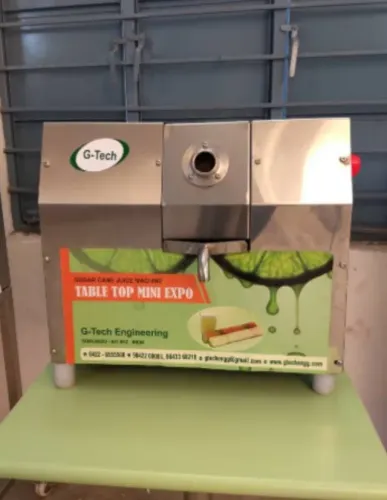
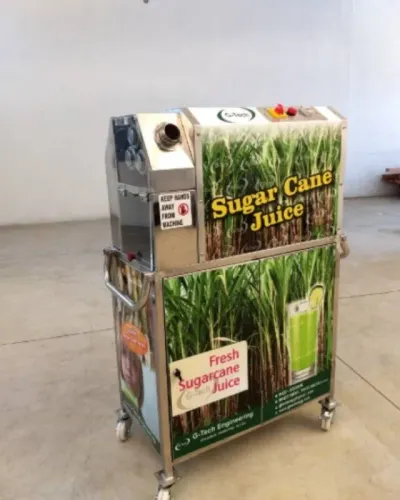
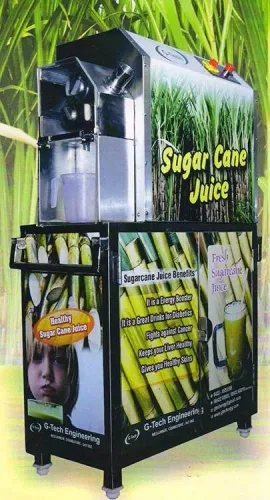
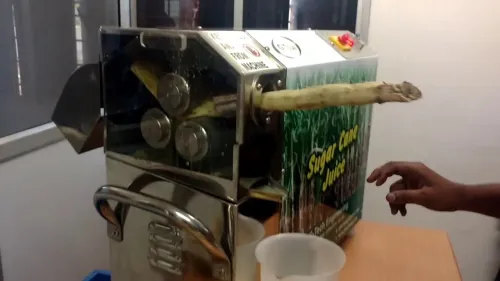
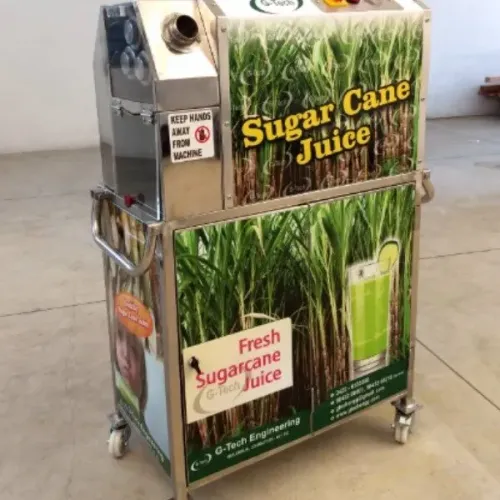
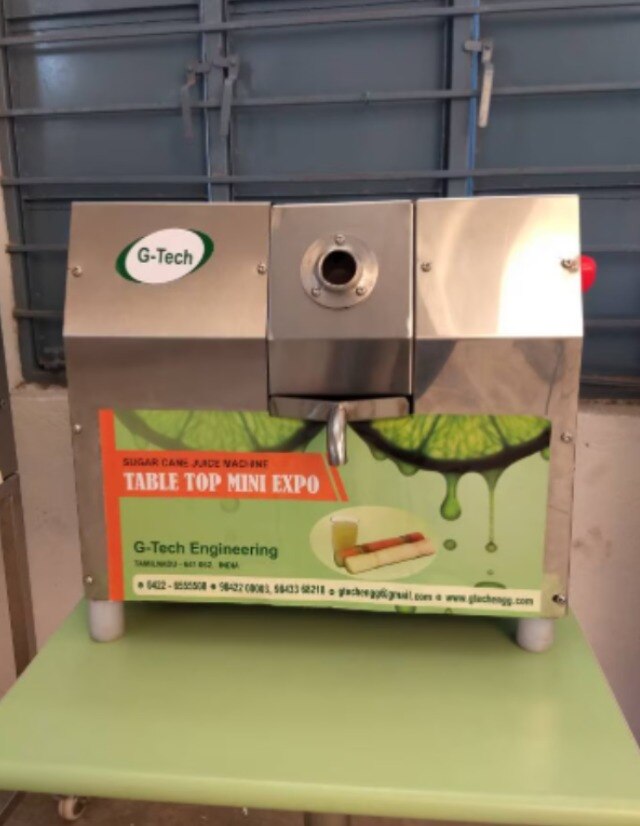
Choose a compact table-top format for a temporary roadside stall when carrying weight, single-phase power and rapid setup matter more than maximum extraction. Choose a stand-mounted or bin juicer machine for a fixed shop when you need a defined cane-loading area, bagasse handling and faster repeated service.
Define “bin” in the quotation: integrated cane bin, bagasse bin or hopper, plus bin volume, food-contact material and cleaning access.
Before buying, time one complete cycle: loading cane, extracting, serving, removing bagasse and washing juice-contact parts. G Tech Engineering is worth comparing on those operating details, not just the stated capacity. If rainy days regularly erase walk-in sales, rent first and track actual paid litres before committing.
Related products
 | Juicer Machine Sugarcane Juicer Machine ( Bin Model -1000) Sugarcane Juicer Machine ( Model : Bin - 1000) It is Very Attractive, Compact and High Effective in Production.It has Inbuilt Dustbin Inside The... View product → |
 | G-Tech cane juicer Table Top Mini It is a table top economical model, compact to use. View product → |
Check Power, Space, Cleaning and Rain Protection Before Installation
A weather-ready site needs dry electrical connections, washable work surfaces, room for cleaning and a covered route for bagasse and wastewater. A commercial juice machine placed beside a road splash zone can turn rain, mud and insects into contamination risks.
1. Confirm the supply before delivery. Record voltage, phase, socket rating and earthing, then check whether the generator or shop circuit can handle the motor’s starting current. Choose a continuous-duty motor with overload protection and a transmission built for repeated starts; horsepower alone will not prevent overheating or nuisance tripping during hot-weather peaks.
2. Measure the working area, not just the machine footprint. Leave access to feed rollers, guards, motor and juice outlets, with enough clearance to remove bagasse without crossing the customer queue. Keep the floor level, non-slip and sloped toward a drain that does not discharge into a public walkway.
3. Provide potable water, a hand-washing point and washable surfaces before installation. Fresh sugarcane juice is ready to drink, and the machine does not replace hand hygiene or protection from dust and insects.
4. Fit a roof or canopy that blocks direct rain without trapping heat. Shield the socket, plug, extension leads and control panel from splash; never operate a wet connection.
5. Place a lidded, washable waste bin beside the outlet. A bin juicer machine setup that lets wet bagasse pile up attracts insects, blocks movement and creates odour. Empty it through each busy shift and clean the juice path at closing.
Frequently asked questions
How does Coimbatore weather affect sugarcane juice demand?
Hot, dry afternoons can increase walk-in demand, while rain, strong wind and weak pedestrian movement can reduce sales. Size for selling-time conditions rather than annual average temperature.
How can you forecast peak-hour sugarcane juice sales?
Count likely customers during the busiest hour and multiply by the average cups per customer. Use separate estimates for hot, dry periods and rainy periods.
What is the difference between machine capacity and saleable throughput?
Rated capacity describes output under controlled operating conditions. Saleable throughput is lower after loading cane, removing fibre, handling cups, cleaning contact parts and managing customer queues.
Should you buy, rent or manually press sugarcane?
Buy when demand is consistent and the machine will remain busy; rent when testing a seasonal location or short-term event; choose manual pressing only when volume and service-speed requirements are low.
What should you check before installing a commercial sugarcane juicer?
Confirm the electrical supply, machine clearance, cane and cup storage, drainage, cleaning access, waste handling and a roof or cover that protects the equipment from rain.
Related products
 | G-Tech cane juicer Stand with bin model This machine is very attractive, compact and high effective in production. It has inbuilt dustbin inside the table of the machine. View product → |
 | G-Tech cane juicer Table Top ( Model : TT- 500 Mini ) Table Top 0.5 HP This Machine Is Design For Easy To Carry. In This Machine We Can Get Maximum 60 Litres of Juice/Hr. View product → |
Keywords